Refunding to a Different Method Than the Customer Paid With: Records, Risks and When to Say No
A customer who paid by card sometimes asks for cash back instead, or wants a bank transfer for a cash purchase. Understanding refund different payment method than original risks helps staff answer without improvising. The method is not a small detail: it is part of the record of the sale itself.
Returning money the same way it arrived keeps the sale, the payment, and the refund joined up. Changing the method breaks that chain, and the break is where errors, disputes, and deliberate misuse can hide.
Start With refund different payment method than original risks Basics
The basic rule for most businesses is simple: refund to the original payment method, to the original card or account, wherever the payment system allows it. That route can be followed later by staff, accountants, and the payment provider, because each step points back to the one before it.
Write that rule into your refunds guidance, and treat any exception as a decision, not a favour. Naming refund different payment method than original risks in training helps staff see why a manager, a written record, and the original receipt are all needed before money moves differently.
Why Refunding Card Purchases in Cash Breaks the Trail
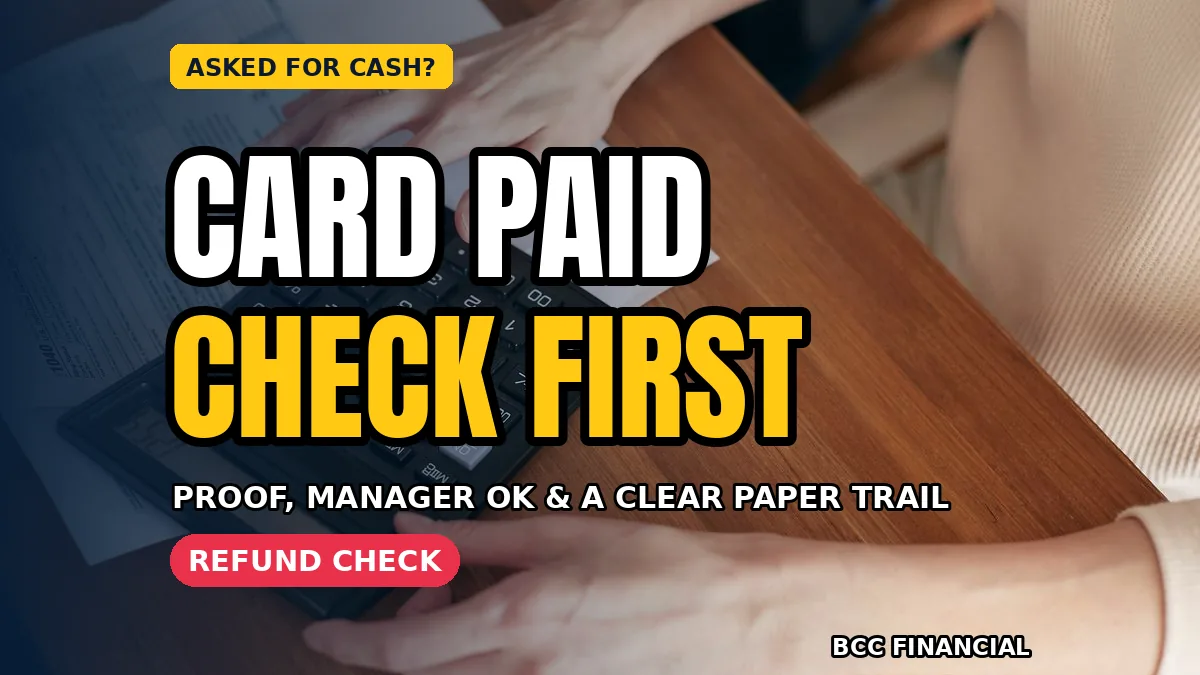
When a card sale is refunded in cash, the card record still shows the original payment, while the cash leaves the till with no matching electronic trail. That gap is the heart of refund different payment method than original risks, because later checks cannot easily prove who received what, or why.
The same gap can be misused deliberately. A stolen or copied receipt, for example, could be presented for cash even though the real buyer was already refunded to their card. Our guide to the refund process for a small business explains keeping each refund tied to its sale.
Narrow Cases a Manager May Approve, With a Record
There can be narrow cases where a manager judges a different method reasonable, for example where the original card account has closed and the provider confirms the usual route cannot work. Even then, the decision should be rare, checked against evidence, and approved by a named manager before payment.
If an exception is approved, record it fully at the time: the original sale, the amount, the reason, the evidence seen, and who authorised it. That written record is what turns an unusual decision into an accountable one, and it is a practical control within refund different payment method than original risks management.
Receipt Wording That Protects Both Sides
Receipt wording matters most when the method changes. Understanding refund different payment method than original risks includes noting, on the refund record itself, the original method, the method actually used, and that the customer accepted it. Both sides should leave with the same version of what happened, in writing.
Keep the wording factual and short, without blame or speculation. Note the date, the amount, and an identifying detail for the person receiving the refund where your policy requires it. File that record with the day’s takings paperwork, not separately, so the full story stays together for later review.
When to Say No, Calmly and Clearly
Sometimes the right answer is no: no receipt, no matching sale record, a request that the refund go to a different person, or pressure to pay cash quickly. Staff should be able to decline, explain that refunds return by the original method, and pass the request to a manager.
A calm refusal is easier when the policy is visible and consistent. Guidance from the Federal Trade Commission on shopping and returns supports clear terms, and our own checks on refund receipt fraud checks help staff spot warning signs. Consistency, not suspicion, is the message to give customers.
Keep the Audit Trail Joining Up Every Day
Method mismatches in refund different payment method than original risks often surface at the end of the day, when the till cash is short and a card refund is missing. A daily check that lists refunds by method makes those gaps visible early, while memories are fresh and paperwork is still at hand to correct honest mistakes.
Review that list weekly for patterns as well as single errors. Several small exceptions, requests handled by one person, or records with missing reasons all deserve a quiet follow-up.
Frequently Asked Questions About Cross-Method Refunds
Why can we not simply refund a card sale in cash?
Because the cash would leave no electronic trail matching the original card payment, making later checks and disputes much harder to resolve. Refunding to the original card keeps sale, payment, and refund joined in one clear chain that staff, providers, and accountants can all follow afterwards.
Are there any cases where a different method is acceptable?
Only narrowly, and only with manager approval and a full written record made at the time. Closed original accounts, confirmed by the provider, are one example. Handling refund different payment method than original risks well means those cases stay rare, evidenced, and clearly authorised, never routine counter decisions.
What should the refund record show for an exception?
Show the original sale and method, the method actually used, the amount, the reason, the evidence seen, and the name of the approving manager. The customer should receive wording that matches your copy. Keep the record with the day’s paperwork so the audit trail remains complete.
How should staff handle a customer who insists?
Stay calm, restate the policy once, and offer the original-method refund or a manager review. Do not debate fraud or accuse the customer of anything. If pressure continues, pause the transaction and involve the manager. A consistent policy, applied politely to everyone, is easier to defend than exceptions.
Conclusion: Same Method Back, Unless Recorded Otherwise
The safest refund is normally the one that travels back the way the money arrived. Exceptions belong with managers, evidence, and a written record, not with quick counter decisions. If you would like help tightening your refund policy and its paperwork, BCC Financial is happy to talk through a clearer routine.
Disclaimer: This article is general educational information only and is not personal financial advice. Use it as general guidance, check your own payment agreements and policies, and seek qualified help for decisions that affect your business or your customers.