
Alarm, Lights and Locks: The Physical Layer That Protects Cash Before Any Procedure Starts
Procedures for counting, storing, and banking cash work best when the building itself is doing its part. Sound business premises security alarm lighting locks cash basics form that physical layer: an alarm that is actually set, entrances that are lit, and locks that are changed when they should be.
None of this is complicated, and that is the point. Physical basics fail quietly when nobody owns them: a setter who assumes someone else armed the alarm, a failed bulb over a dark entrance, or a spare key held by someone who left months ago.
Start With business premises security alarm lighting locks cash Basics
Treat the alarm, the lighting, and the locks as one layer, not three separate jobs. Together they decide how the premises look to an opportunist after hours, how safely staff move cash to the safe, and whether a problem is noticed quickly or only after a loss.
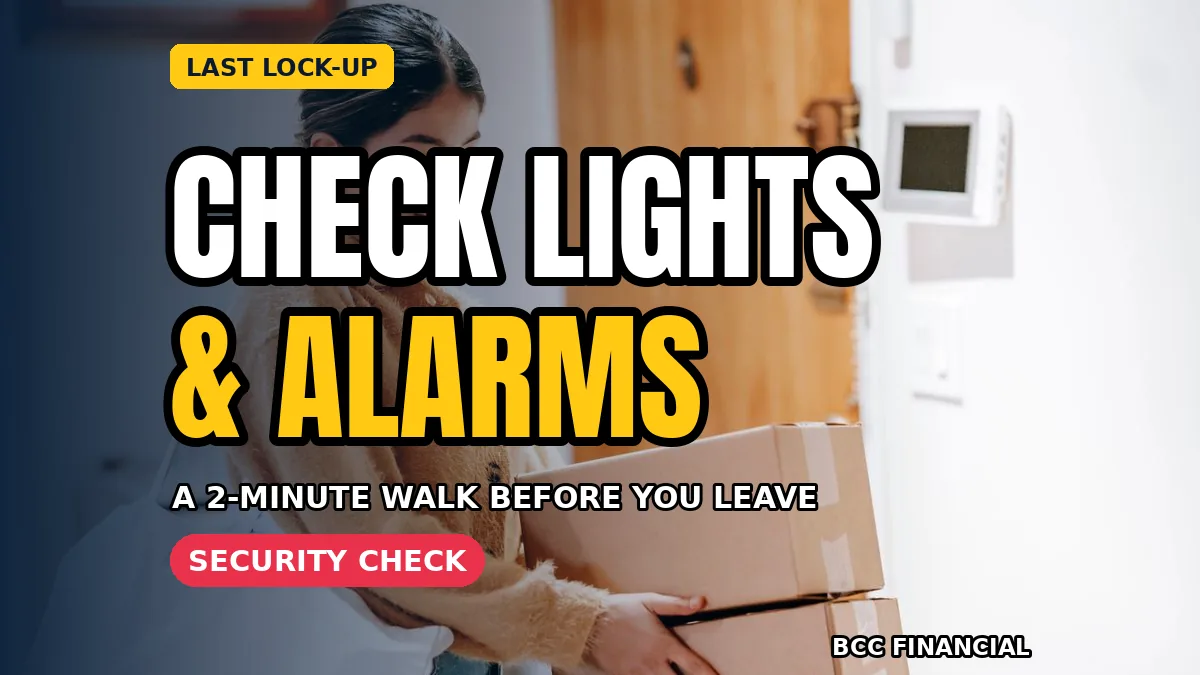
Assign each part a named owner and a simple check. That ownership is the starting point for business premises security alarm lighting locks cash routines, because unnamed tasks drift. A short closing checklist, kept by the door or the alarm panel, turns good intentions into a repeated nightly habit.
The Alarm Must Actually Be Set, Every Night
An alarm only protects cash when it is set, correctly, by a known person, every night the premises close. Name the setters for each shift pattern, including cover for holidays and sickness. Uncertain handovers, where each person assumes another set it, are where business premises security alarm lighting locks cash basics break down.
Keep a brief setting log or use the alarm’s own history, and review it when a setting is missed. Deal with false alarms and faulty sensors promptly rather than learning to ignore them.
Lighting Over Entrances and the Safe Route
Good lighting covers the places people actually use: entrances and exits, the route staff walk with takings, and the area around the safe where your premises design allows it. A single failed bulb can leave one of those spots dark, so lighting checks belong in the closing and opening routines.
Walk the route for business premises security alarm lighting locks cash at night occasionally, not only in daylight, and see it as staff and visitors do. The U.S. Small Business Administration covers choosing and equipping premises, and our guide to CCTV cameras and till positioning explains how visibility supports the wider setup.
Change Locks on the Same Triggers as Safe Codes
In business premises security alarm lighting locks cash, locks and keys need the same discipline as safe codes. When a key holder leaves, when a key is lost, or when access should end for any reason, change the lock or rekey it as promptly as you would change a code. Old keys in circulation quietly undo careful cash procedures.
Keep a short key list: who holds each key, which lock it fits, and when it was issued. Review that list whenever staff change. Our routine for a safe code change when a staff member leaves uses the same triggers, so one leaving process can cover codes, keys, and alarm details together.
Do a Monthly Walk-Around Check, and Record It
Once a month, for business premises security alarm lighting locks cash, walk the whole premises with fresh eyes and a short checklist: alarm setting and sensors, bulbs and fittings, locks, hinges, windows, and the route between till and safe. Note what you find, who will fix it, and by when, then check the fixes happened.
A recorded walk-around turns vague awareness into dated evidence that the physical layer is maintained. It also catches slow drift: a storeroom window that no longer shuts properly, a side door used as a shortcut.
Fix Small Physical Faults Quickly
Physical faults rarely announce themselves as security problems. A sticking lock becomes a door left on the latch, a dim entrance becomes a place staff hurry through with takings, and a faulty alarm sensor becomes a zone nobody arms.
Set a simple rule that faults affecting doors, lighting, or the alarm are reported the day they are noticed and chased until fixed. Keep a named contact for your alarm provider and locksmith. Fast repairs are usually cheaper than the losses and disruption that follow a preventable incident.
Frequently Asked Questions About Premises Physical Security
Who should be responsible for setting the alarm?
Name specific people for each closing pattern, including cover arrangements, rather than leaving it to whoever leaves last. A short log or the alarm history helps you spot missed settings early. Clear ownership is what makes the alarm a real protection instead of an assumption each night.
How often should locks and keys be reviewed?
Review the key list whenever a holder leaves, a key is lost, or roles change, and look at it again during your monthly walk-around. Treating lock changes as part of business premises security alarm lighting locks cash care, on the same triggers as safe codes, keeps access current.
What should a monthly walk-around cover?
Cover the alarm and its sensors, lighting over entrances and the safe route, every external lock and window, and anything blocking visibility or safe movement. Record faults, owners, and dates, then verify repairs. Keep the checklist short enough that the walk actually happens every month.
Is good lighting really a cash security measure?
Yes, as part of the physical layer. Lit entrances and routes help staff move takings safely, make the premises look cared for and attended, and support any cameras you use. Lighting works alongside procedures; it does not replace counting, storage, and banking routines, but those routines are weaker without it.
Conclusion: The Building Is Your First Procedure
Before any cash procedure starts, the building sets the conditions: an alarm armed by a named person, lit entrances and routes, and locks changed when access changes. A monthly walk-around keeps that layer honest. If you would like help reviewing the physical side of cash security, BCC Financial is happy to help.
Disclaimer: This article is general educational information only and is not personal financial advice. Use it as general guidance, check your own payment agreements and policies, and seek qualified help for decisions that affect your business or your customers.