Two Safety Nets: Why the Owner Needs a Personal Buffer Separate From the Business Emergency Fund
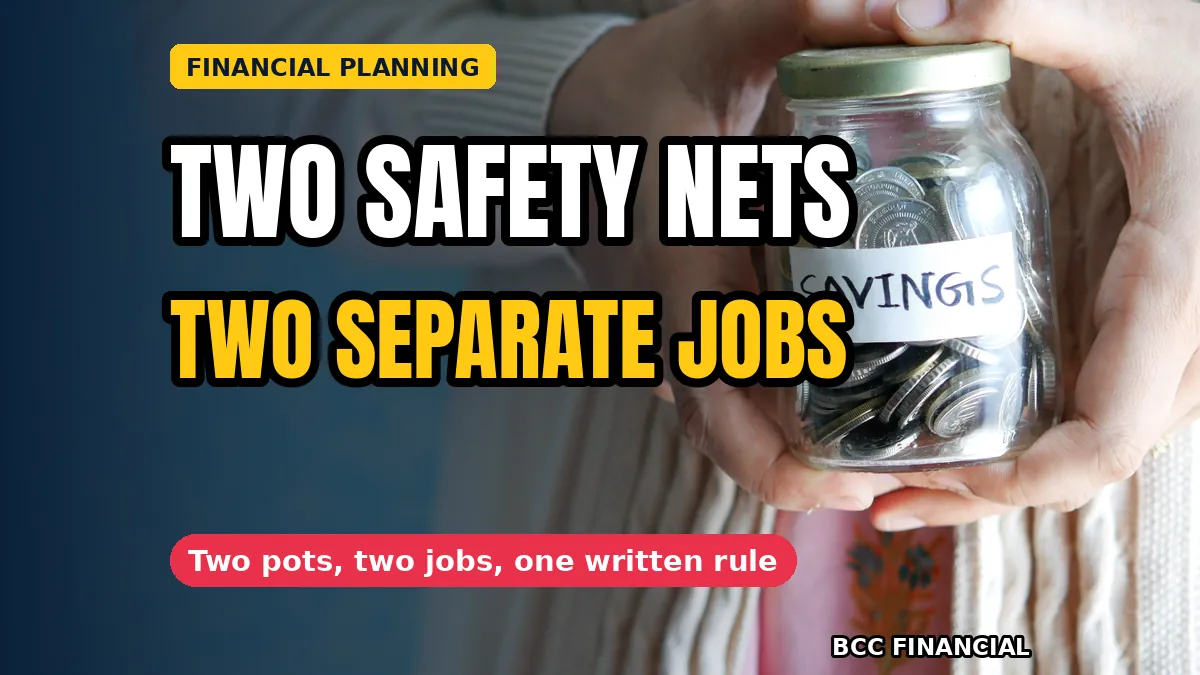
When a crisis hits, most small business owners reach for whatever money is nearest, and that is usually the business account. A household emergency then raids the tax pot, and a business emergency then raids the household. Owner personal emergency buffer separate business reserve is the fix: two safety nets, each with its own job, kept apart on purpose.
This guide explains the two buffers, the order to build them in, and the written rule that decides which pot a crisis may touch, so one bad week never empties both.
Owner Personal Emergency Buffer Separate Business Reserve Starts With Two Jobs
The two buffers look alike, but they do different jobs. The business reserve keeps the business trading through a quiet month or a broken machine. The owner’s personal buffer keeps the household steady when the owner cannot work, or when a household bill lands that the business never caused.
Mixing them is the trap. A household emergency paid from the business reserve leaves the business short, and a business shortfall paid from the household buffer leaves the family short. Separate pots, separate jobs, and a line between them that is never crossed by habit.
The Business Reserve Keeps the Business Trading
The business reserve is the older of the two, and most owners build it first. It covers the costs that keep the business trading: rent, wages, insurance and the tax pot, for the weeks when takings dip or a machine breaks.
Our guide to an emergency fund for businesses covers how that reserve is built. Owner personal emergency buffer separate business reserve uses the same habit for the household pot: a fixed amount set aside regularly, in an account the business does not spend from day to day.

The Owner’s Personal Buffer Protects the Household
The personal buffer is the owner’s own safety net, held in a personal account, for household costs only: the mortgage or rent at home, household bills, and the weeks when the owner cannot work. It is not business money, and the business never borrows from it.
How much it needs to hold is a household question, worked out from the household’s own bills, not from the business’s takings. Owner personal emergency buffer separate business reserve works because the household figure is worked out on its own, away from the business’s books.
Which Buffer Comes First, and Why the Order Matters
Build the business reserve first, because a business that cannot trade pays nobody, owner included. Once the reserve covers the business’s own shortfalls, start the personal buffer with the same regular habit, even if the amount is small at first.
The order matters because the business reserve is the one that protects the income itself. A personal buffer built first, while the business has nothing, is a household net under a business with no floor.
The Written Rule for Which Pot a Crisis May Touch
Write the rule down: which pot may a crisis touch, and in what order? A business crisis touches the business reserve first. A household crisis touches the personal buffer first. Neither pot is touched for the other’s crisis until the right one is empty, and then only by a decision, not by habit.
Put the rule on one page, with the two account names and the two balances, and keep it where the owner does the weekly count. Our notes on an owner absence continuity plan cover the same idea: the decisions made on a calm day are the ones that hold on a bad one.
Building the Personal Buffer on a Small Regular Amount
Owner personal emergency buffer separate business reserve is a slow habit, not a single deposit: a small fixed amount, moved on the same day each month, before anything else is spent. A small amount moved every month beats a large amount promised for a good month that never comes.
Review the amount once the household bills change, such as a new rent or a child starting school, and raise it in small steps. The buffer grows slowly, and that is the point: a buffer built slowly is a buffer that stays built.
Reviewing Both Buffers Once a Year
Once a year, look at both buffers together. Is the business reserve still enough for the business’s costs, and is the personal buffer still enough for the household’s? If the business has grown, both figures may need to grow with it.
The SBA guidance on managing your business finances covers the same saving habit: a separate pot, built slowly, for the costs nobody plans. Check the two balances, update the written rule, and file the page with the year’s records.
Frequently Asked Questions
Why does the owner need a separate personal buffer?
Because a household emergency paid from the business reserve leaves the business short, and a business shortfall paid from the household buffer leaves the family short. Two buffers, two jobs, kept apart on purpose.
Which buffer should we build first?
The business reserve, because a business that cannot trade pays nobody, owner included. Once it covers the business’s own shortfalls, start the personal buffer with the same regular habit. Owner personal emergency buffer separate business reserve is built in that order, business first, household second.
Can the business borrow from the owner’s personal buffer?
Only by a written decision, never by habit, and only after the business reserve is empty. The personal buffer is household money, held in a personal account, and treating it as a business pot defeats the point of keeping it separate.
How do we decide which pot a crisis may touch?
Write the rule down before any crisis arrives: a business crisis touches the business reserve first, and a household crisis touches the personal buffer first. Owner personal emergency buffer separate business reserve works because the rule is written on a calm day, not made up on a bad one.
Two safety nets beat one, but only when they stay separate. A business reserve that keeps the business trading, a personal buffer that keeps the household steady, built in that order and guarded by a written rule. In owner personal emergency buffer separate business reserve done well, one bad week never empties both.
If your household and your business are sharing one safety net, BCC Financial can help you set out the two buffers and the rule between them. Get in touch to talk about your reserves and your household.
This article is general information for business owners and is not financial, legal, or tax advice. Savings, account and tax rules vary by location and can change, so check what applies to you or speak with a qualified professional.