Self-Checkout Cash: Emptying, Refilling and Reconciling Machines Your Customers Operate Themselves
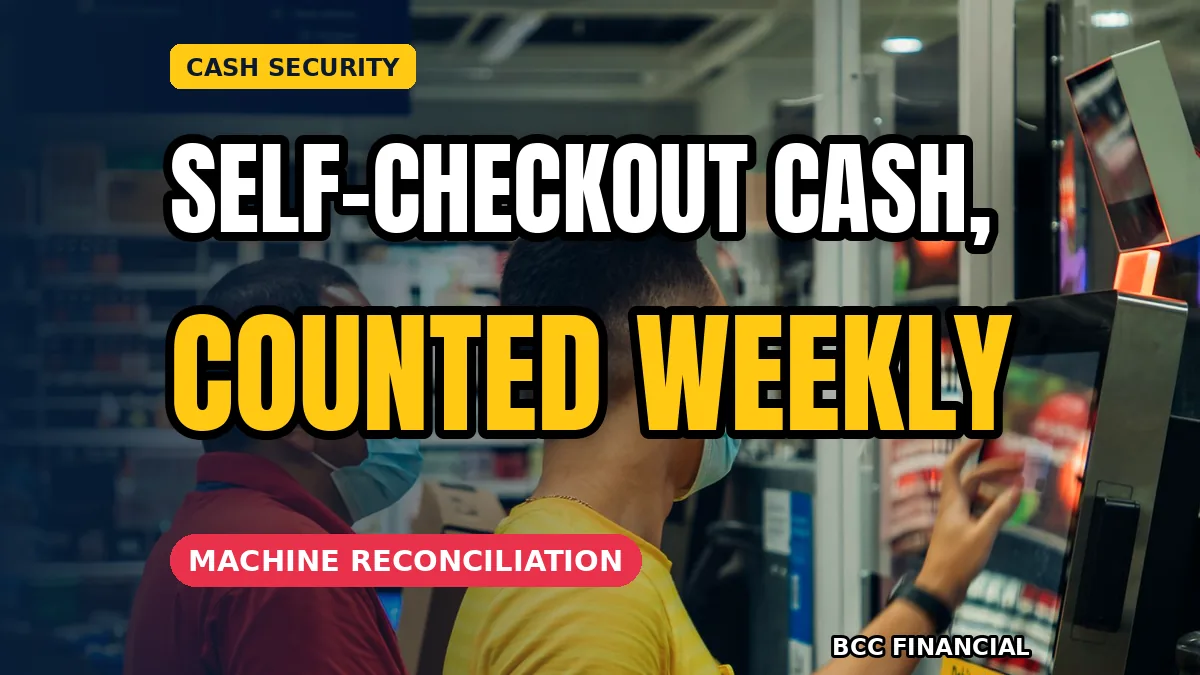
Self-checkout machines take money all day from customers nobody is watching. Notes slide in, coins clatter down, change rattles out — and because no member of staff handles the cash, it is easy to assume the machine looks after itself. It does not. A self checkout cash emptying reconciling routine is what stands between a smooth machine and a slow leak that only shows up weeks later, when nobody can say where the money went.
The machines stand inside a staffed shop, so help is nearby when one jams. But that only helps if someone owns the cash routine. This guide sets out the emptying schedule, the refill, and the weekly reconciliation, so the machines your customers operate themselves still answer to a human count.

Self Checkout Cash Emptying Reconciling: A Weekly Routine, Not a Reaction
Start by deciding who owns each machine. One named person per machine per week is enough: they empty it, refill it, and reconcile it, and their name is on the sheet. When ownership rotates without a record, everyone assumes someone else did it, and the machine fills up until it jams at the worst possible moment — a Saturday afternoon, with a queue forming behind it. That is why a self checkout cash emptying reconciling schedule is fixed in advance.
Write the routine down on one page and keep it at the machine or in the cash office: the emptying days, the refill float, who holds the keys, and what happens when the figures do not match. A routine that lives only in one person’s head leaves with them on their day off.
Emptying on a Schedule, Not When It Jams
Empty the note and coin cassettes on a fixed schedule — for most shops, at least once a week, and more often in busy periods — rather than waiting for the machine to complain. A machine that is emptied when it is full has already been struggling: notes rejected, change running short, customers calling for help. Scheduled emptying keeps the machine working and the cash moving to the safe in manageable amounts.
Count the emptied cash away from the shop floor and record the counted amount against the machine’s own report before the bag is banked or moved to the safe. If the shop already uses a collection service, our guide to cash collection services for retail stores explains how machine takings fit into a regular pickup round.
Refilling: The Float Counted In and Signed For
A self-checkout machine needs a float just like a staffed till: enough notes and coins to give change through the day, but not so much that a large sum sits unguarded in a machine on the shop floor. Decide the float for each machine, write it down, and keep it steady so that any change is visible at once. That steady float is the baseline every self checkout cash emptying reconciling check is measured against.
Count the refill in before it goes into the machine, and sign for it. The person refilling notes the denominations — how many of each note and coin — and the total, and a second person checks the count where staffing allows. The float is then loaded cassette by cassette, and the machine’s own float figure is checked against the counted figure before the machine goes back into service.
Reconciling the Machine Record Against the Cash
Every self-checkout machine keeps its own record: what it took, what change it gave, and what should be inside it. Once a week, compare that record with the physical cash — float counted in, plus takings counted out, less top-ups. When the two agree, the reconciliation is a quiet tick and a signature.
Work through the comparison machine by machine, not as one combined total. A surplus in one machine can hide a shortage in another, and a combined figure that balances tells you nothing about either. The self checkout cash emptying reconciling habit earns its keep here: one machine, one record, one counted figure, checked the same week the money moved.
File the machine report with the count sheet. The US Small Business Administration’s guide to managing business finances sets out the record-keeping habits that make this kind of weekly check straightforward rather than a month-end chore.
When the Numbers Do Not Match
If a difference is large or repeats, take the machine out of service for a full check rather than letting it trade another week. A self checkout cash emptying reconciling log shows the pattern plainly. Check the cassette seating, the coin paths, and the change given against the machine’s log of transactions. If your shop also keeps a drop safe for staffed tills, our guide to drop safes versus full safes at the counter explains how the same discipline of moving cash out of reach applies behind the counter too.
FAQ
How often should self-checkout machines be emptied?
At least once a week in ordinary trading, and more often in busy periods. A self checkout cash emptying reconciling schedule set in advance beats emptying when the machine jams, because the cash is counted while the trail is still fresh.
Who should hold the machine keys?
As few people as the shop can manage — ideally the named owner for the week and a supervisor. Keep a key log, and change the arrangement promptly if a key holder leaves.
What if a customer says the machine took their money and gave nothing back?
Note the machine, the time and the amount, check the machine’s transaction log, and let a supervisor approve any refund.
Should the float be the same in every machine?
Not necessarily — a machine near the door may need more change than a quiet one. Decide each float on its own, write it down, and keep it steady so that changes stand out.
Conclusion: Machines Still Answer to a Count
Self-checkout machines save staff time at the till, but they do not save the shop from counting. The self checkout cash emptying reconciling routine is simple: empty on a schedule, refill a signed float, and reconcile the machine’s record against the counted cash every week. Do that, and the machines stay honest, helpful, and worth having.
If machine cash is one of several cash habits you are tightening this year, BCC Financial’s Cash Security guides apply the same weekly discipline to safes, tills and collections. A self checkout cash emptying reconciling schedule is the place to start. Start with the schedule: pick the emptying days, name the owner, and write both down.
This article is general educational information only and is not financial advice. Every shop’s circumstances differ, so consider seeking professional advice for decisions about your own business.