Sponsoring a Local Team or Event: Costing Sponsorship Honestly — the Cash, the Kit and the Return You Can Actually Measure
A sound local sponsorship cost small business return routine starts with a question most small businesses never ask: what did the sponsorship actually cost? The cheque is the easy part — usually the smallest. There is the kit, the banners, the staff hours on the day, and quiet preparation that never appears on an invoice. Added together, the real figure is often far higher than the amount agreed at the first meeting — which is why honest costing matters before signing.
That does not make sponsorship a bad idea. A local team or event can put a business in front of exactly the people it wants to serve, and a season of steady presence builds trust a short advertising burst rarely buys. The point is to treat it like any other spend: count it fully, agree how success will be judged up front, and let the numbers decide whether it happens again.

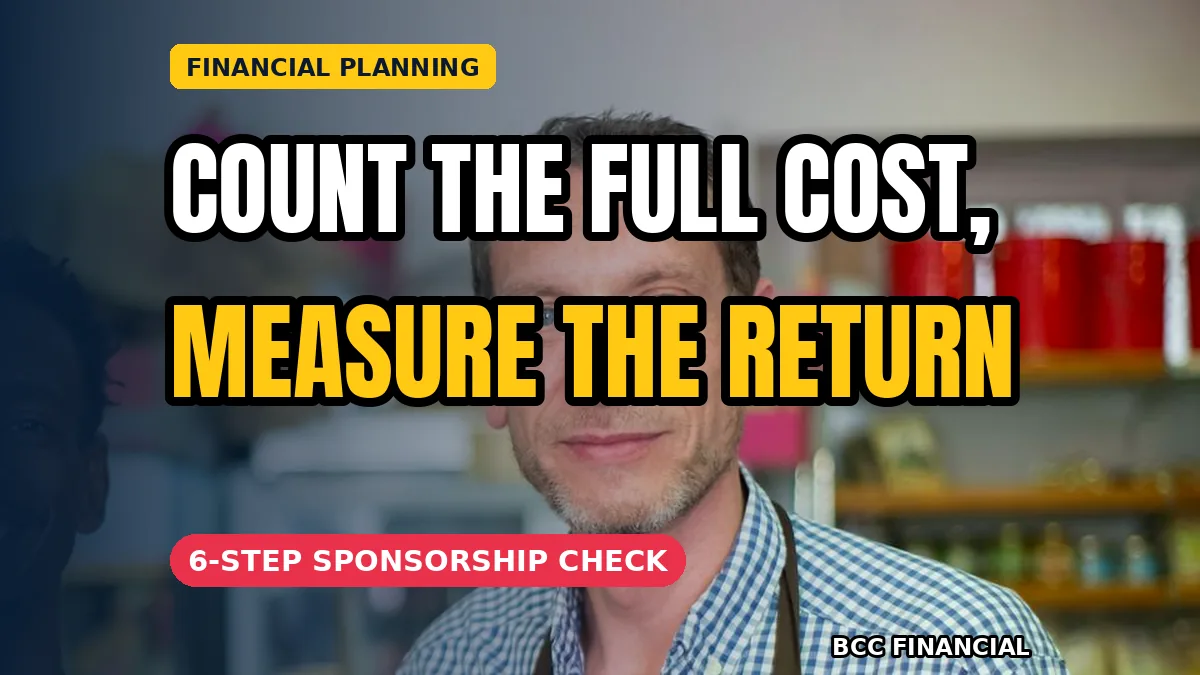
A local sponsorship cost small business return Plan in Six Steps
The local sponsorship cost small business return approach below fits on a single page. Work through it before the first conversation with a club or organiser, and keep it beside the agreement for the whole season.
- Write down the cash fee and every extra cost: kit, banners and travel.
- Add the staff hours it will take, including the event day itself.
- Agree one simple measure of return before signing, such as a counter code.
- Record every cost and response in one place through the season.
- Review the figures at the midpoint, not only at renewal time.
- Decide renewal on the numbers at the agreed date, whatever the relationship.
Counting the Full Cost: Cash, Kit and Staff Time
List everything the sponsorship will require, not just the fee on the proposal. Kit carrying the business name, banners, printed material and travel to matches all cost money, and each is easy to forget when the conversation is friendly. In a local sponsorship cost small business return count, staff time is the largest hidden cost: hours at events, preparing material and answering enquiries are hours the business pays for.
Put one total beside the fee so the decision uses the real figure. If kit is reused across seasons, note that honestly, not as if it costs nothing the second time. A local sponsorship cost small business return habit means the owner can say, without guessing, what the sponsorship cost in full — and that figure, not the cheque alone, is what the return must justify.
Agreeing One Measure Before You Sign
Without an agreed measure, a sponsorship is a donation with a logo on it — fine, while everyone is honest about it. If the business wants a visible return, the measure must be agreed before signing, while both sides are still deciding. A counter code, a question at the till, or a tally of enquiries naming the team all work; the test is whether the measure can be counted without extra effort on a busy day.
Keep the measure to one thing, not five. Several measures compete for attention and none gets counted properly; one measure becomes a habit within a week. A local sponsorship cost small business return agreement writes the measure in plain words, names who counts it, and sets the review date. The US Small Business Administration’s market research guidance explains how to understand a local audience before spending.
Making the Sponsorship Work While the Season Runs
Sponsorship rewards attention during the season, not only at signing. Turning up at matches, sharing the team’s news and mentioning the sponsorship naturally in the shop all cost little and show the business as a supporter, not just a name on a shirt. Photographs from the season, taken with permission, give honest material for the window and social pages.
Record responses as they arrive, in the same place as the costs. A customer mentioning the team, a code used at the till, or an enquiry naming the event should be noted on the day — memories of a whole season are unreliable by renewal time. Our guide to discount weeks and sale promotions sets out how to plan a short promotion; the same habit of recording what worked applies to a sponsorship season.
The Renewal Date: Letting the Numbers Decide
A local sponsorship cost small business return routine agrees the renewal date at the start — the moment the figures speak. By then the business has the full cost, the agreed measure and a season of notes, and the question is simple: did the sponsorship return enough, in the way agreed, to justify doing it again? A good relationship with a club is real and worth something, but it should not be the only reason a renewal is signed.
If the figures are thin, that is information, not failure. The business may sponsor a smaller package, support one event instead of a season, or pause for a year and return later. Our annual financial calendar places money tasks through the year, so a sponsorship decision can be weighed against everything else the business plans to spend.
FAQ
What does a local sponsorship really cost?
More than the fee on the proposal: kit, banners, printed material, travel and staff time, and a local sponsorship cost small business return check adds those together before anything is signed, so the decision uses the real figure.
How can a small business measure a sponsorship’s return?
Agree one simple measure before signing — a counter code or a question at the till — and count it through the season. One measure counted honestly says more than several never recorded.
Should a business sponsor a team purely for goodwill?
It can, while everyone is honest that goodwill is the aim. Trouble starts when a goodwill spend is later judged as advertising. Decide the aim first, then choose the measure.
When should a sponsorship be renewed?
At the date agreed before the season started, once the full cost and agreed measure have been reviewed together. If the figures are thin, a smaller package or a single event may suit better than a full season.
Conclusion: Count It Fully, Measure It Honestly, Decide on the Numbers
A sound local sponsorship cost small business return habit is three disciplines: count the cash, kit and staff time before signing, agree one measure of return while both sides are still deciding, and let the numbers, not the relationship, decide renewal — confirming anything about tax or wording with the business’s own provider or adviser.
If promotion spending is one money habit you are tightening, BCC Financial’s Financial Planning guides apply the same honest counting to the rest of the year’s marketing. Start with the sponsorship under consideration.
This article is general educational information only and is not financial advice. Every business’s circumstances differ, so consider seeking professional advice for decisions about your own business.