The Customer Who Pays Cash and Asks for No Receipt: The Request, the Record and the Refusal That Keeps You Safe
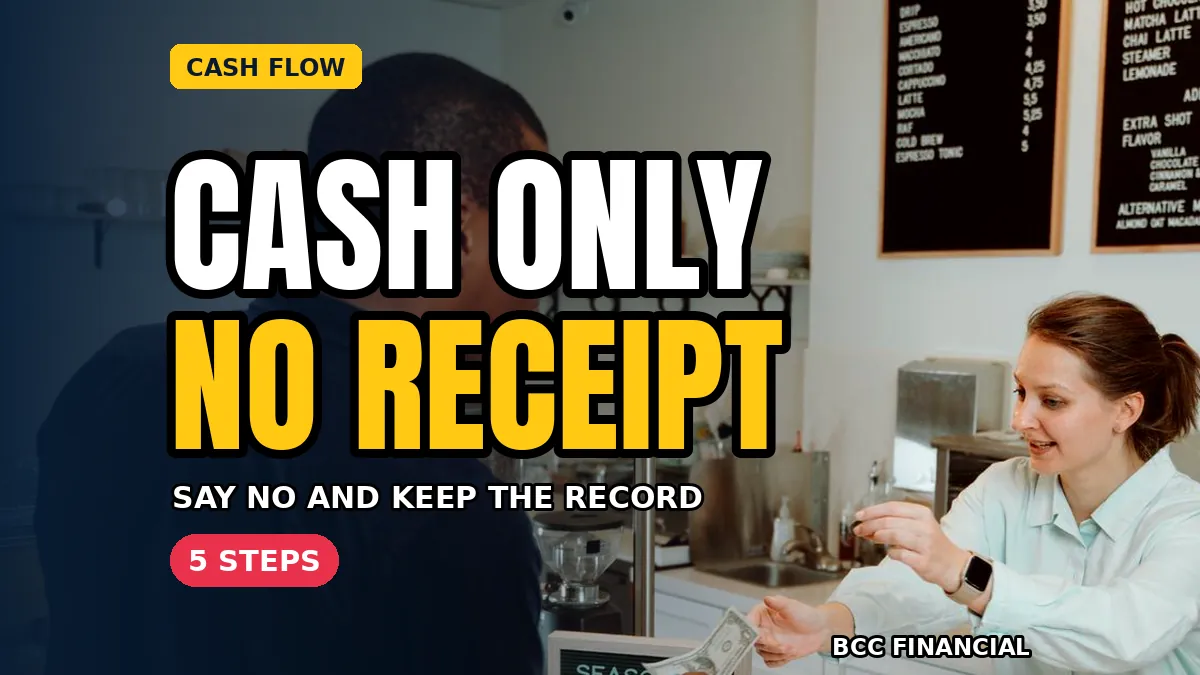
A customer hands you cash and asks for no receipt, and the moment feels small: a quiet request, a handful of notes, and no harm meant. But a sound customer pays cash asks no receipt request record refusal routine treats that moment as a serious one, because the request, the record and the refusal are three separate steps, and skipping any of them leaves you exposed. Give the receipt anyway, record the sale anyway, and refuse the request politely and firmly, and the cash in your till will always match the sales in your books.
The Request in a customer pays cash asks no receipt request record refusal Moment
Listen to the request without reacting to it. The customer may say they do not need a receipt, that they will lose it anyway, or that they would rather the sale was not recorded. None of those change what you should do, but hearing them calmly matters, because a customer who feels judged will argue, while a customer who feels understood will usually accept the receipt and move on. Keep your voice even, keep the transaction moving, and do not let a small request turn into a long debate at the counter.
Some requests are harder, because the customer offers something in return: cash now, no receipt, and a lower price. That offer is the one to refuse most clearly, because a discount for no record is a discount for hiding the sale, and a business that hides sales hides them from its own books, its own tax records and its own protection. A clear customer pays cash asks no receipt request record refusal routine says no to that offer every time, politely and without exception, because the saving is small and the risk is not.
The words that work at the counter
Keep a short sentence ready and use the same one every time, so the refusal never sounds personal. Try: I always give a receipt, because it protects us both if anything goes wrong with the item. That single sentence does three jobs: it states the rule, it gives a reason the customer can accept, and it keeps the focus on protection rather than suspicion. Say it with a smile, hand over the receipt, and move on to the next customer without waiting for permission.

The Record in a customer pays cash asks no receipt request record refusal Routine
Record every cash sale on the day it happens, while the money is still in your hand and the details are fresh. Write the date, the item or service, the amount and the receipt number into your cash book or your software, and put the cash into the till or the safe at once. A sale recorded on the day takes seconds; a sale remembered at the end of the week takes guessing, and guessing is where cash businesses lose money without ever knowing it. That same-day entry is the first rule of a customer pays cash asks no receipt request record refusal routine.
Keep the records in one place and keep them simple enough that anyone on the team can follow them. A cash book, a receipt book and a daily till sheet are enough for most small businesses, and software that does the same job is fine too, as long as every sale lands in it on the day. The test of a good record is simple: could someone who was not there read it and understand exactly what was sold, for how much, and when? A good customer pays cash asks no receipt request record refusal routine passes that test on every sale, including the ones the customer asked you not to record.
The Refusal That Keeps You Safe
Refusing the request is the part that feels hardest, and it is the part that matters most. A business that gives a receipt for every sale has a complete record, a clean set of books, and a clear answer for any question about its cash. A business that sometimes gives a receipt and sometimes does not has a record full of gaps, and gaps are where trouble grows: a customer who claims they paid more, a return with no proof of purchase, or a tax question you cannot answer from your own books. A complete record is the protection a customer pays cash asks no receipt request record refusal routine is built to give.
Frequently Asked Questions
What should I do when a customer pays cash asks no receipt request record refusal request is made?
Stay calm, give the receipt anyway, and record the sale in the usual way. Use one short sentence, such as that you always give a receipt because it protects you both, and then move on. Do not debate the request and do not make an exception, because the exception is what creates the gap in your records. The calm sentence is the tool a customer pays cash asks no receipt request record refusal routine gives you at the counter.
Is it ever acceptable to sell for cash with no receipt?
No. Every sale needs a receipt and a record, however small it is and however much of a hurry the customer is in. The receipt protects the customer if the item is faulty and protects you if the sale is ever questioned, and a business with complete records is a business that can answer for its own cash.
What if the customer offers a lower price for no receipt?
Refuse politely and keep the full price with a receipt. A discount for no record is a discount for hiding the sale, and it leaves you with no proof of the transaction, no record in your books, and no protection if anything goes wrong. The saving is small and the risk is not worth it. The full price with a receipt is the standard a customer pays cash asks no receipt request record refusal routine never drops.
A Receipt for Every Sale, Without Exception
The request will come again, and it will sound just as harmless next time. Give the receipt, record the sale, and refuse the request with the same calm sentence every time. That is the whole of a sound customer pays cash asks no receipt request record refusal routine, and it is the habit that keeps your till, your books and your business in agreement. If cash handling is the part of the day you dread, BCC Financial can take the routine off your hands — the records, the reconciliation and the awkward refusals — so you can serve customers with confidence.
More from BCC Financial: paying a supplier in cash at the trade counter and the cash payment that leaves a paper trail, plus the Small Business Administration on managing your business.
Disclaimer: This article provides general educational information for small business owners. It is not legal, tax or financial advice, and rules on receipts, records and cash handling can differ by location. Confirm the rules that apply to your area with a qualified adviser before you act.