Personal Bags Away From Cash Areas: A Small Rule That Protects Staff as Much as Money
A staff personal bags cash area rule security policy is a simple one: personal bags and coats are kept in a staff area away from the tills and the safe. It protects the money, but it protects your staff just as much — because when a discrepancy is investigated, an honest member of staff who never had a bag near the till is never under suspicion.
The rule is small, cheap, and easy to explain, which is why it works. It is not about distrusting your team. It is about removing the doubt that hangs over everyone when cash goes missing and bags were sitting beside the till.
Why a Staff Personal Bags Cash Area Rule Security Policy Protects Everyone
When cash goes missing, the first question is always who had access to it. If bags and coats were lying beside the till, every person on the shift is a suspect, including the honest ones, and there is no way to clear them.
A bags rule removes that question before it is asked. Bags kept in a staff area mean nobody had a bag near the cash, so the investigation can focus on the till records and the cash counts instead of on your people.
Give Staff Somewhere Proper to Put Their Bags
A rule only works if you provide the alternative. Give staff lockers, or at least a named shelf or hooks in a staff room away from the tills and the safe, where bags and coats can be left during a shift.
Make the storage easy to reach at the start and end of a shift, and make sure it is dry and secure. A locker that is hard to reach will not be used, and a rule that is hard to follow will not be followed. A staff personal bags cash area rule security policy fails the first week if the only storage on offer is a damp corner nobody wants to use.
Apply the Rule to Everyone, Including the Owner
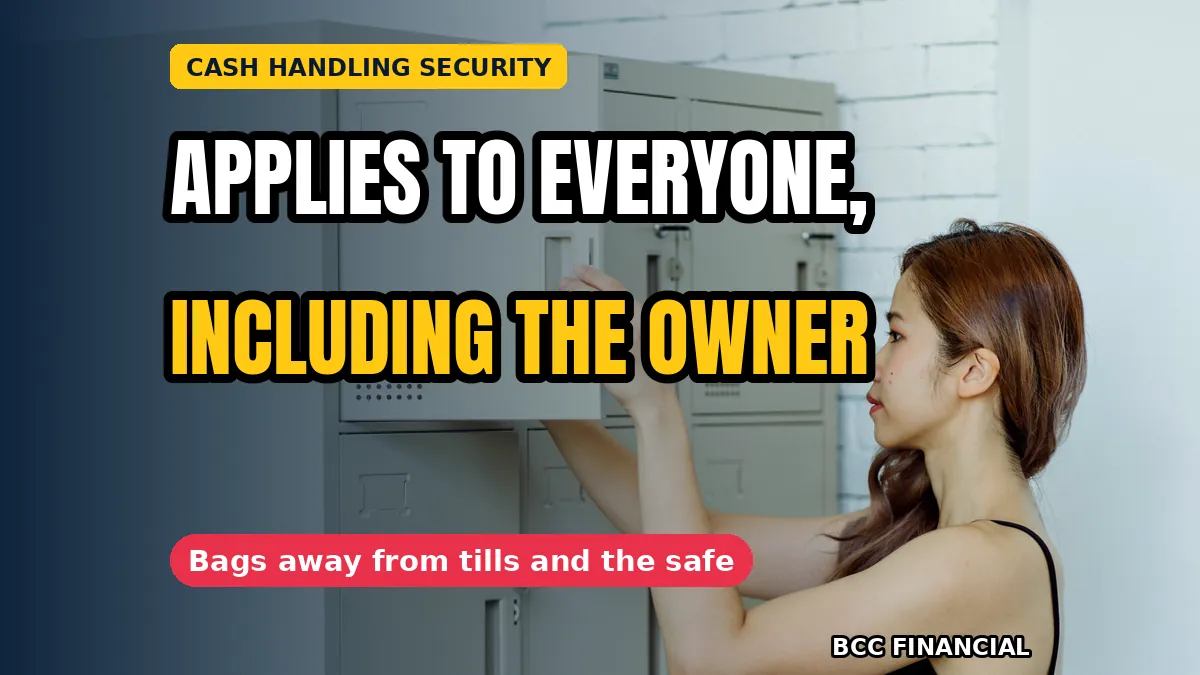
The rule must apply to everyone who works in the business, including the owner and the manager. The moment one person is exempt, the rule stops being a fair rule and starts being a message about who is trusted and who is not.
When the owner leaves a bag in the staff area too, the team sees the rule as protection rather than suspicion. A rule that the owner follows is a rule the staff will follow, and a rule with exceptions is a rule that will be argued about.
Write the Rule Down and Explain the Reason
Put the bags rule in your written cash handling policy, in plain words: personal bags, coats and shopping are kept in the staff area, away from tills, the safe, and the cash counting area. New staff should read it on their first day.
Explain the reason when you introduce it, and the reason is fairness, not suspicion. A staff personal bags cash area rule security rule protects honest staff from being blamed, and most people understand that once it is said out loud. Our cash handling policy guide shows how to write it into the policy.
What Counts as a Cash Area
Be clear about where the rule applies. The till area, the safe, the cash counting table, and the route cash takes between them are all cash areas, and bags do not belong in any of them.
The staff room, the lockers, and the changing area are not cash areas, and that is where bags belong. If a member of staff is unsure whether a spot counts, the answer should be in the written policy, not left to a guess on a busy morning.
Handle a Breach Calmly and Consistently
When someone forgets and leaves a bag by the till, deal with it calmly and the same way every time. Remind them of the rule, ask them to move the bag to the staff area, and note it if it keeps happening.
Do not make a scene, and do not treat a forgotten bag as proof of anything. A staff personal bags cash area rule security policy works because it is applied steadily, not because anyone is ever accused over a bag.
How the Rule Helps When a Discrepancy Is Investigated
When a till is short, the investigation starts with the records: the till float, the takings sheet, and the cash discrepancy incident log. The bags rule means the investigation stays there, because nobody had a bag near the cash to hide money in.
That protects your staff and it protects you. The SBA’s guidance on managing your business finances covers the routines that keep a small business on track, and a written bags rule is one of the smallest and most useful of them.
Frequently Asked Questions
Can staff keep a bag under the counter?
No. Under the counter is part of the till area, and a staff personal bags cash area rule security policy keeps bags in the staff area, away from the tills and the safe.
What about a small handbag or a phone?
Phones and small personal items used during a shift should stay in the staff area too, unless your policy says otherwise. Keep the rule simple and the same for everyone, so nobody has to judge what counts as small.
Does the rule apply to delivery drivers and visitors?
Yes, in spirit. Visitors and drivers should not be left alone in a cash area with their bags, and staff should know to keep deliveries and visitors away from the till and the safe.
What if there is no staff room or locker space?
Use a named shelf or hooks in a back room away from the cash areas, and write that spot into the policy. A staff personal bags cash area rule security routine needs a named place, not a large one.
A bags rule is one of the smallest rules a business can have, and one of the fairest. Give staff a proper place for their bags, apply the rule to everyone, and the next time a till is short, the investigation will start with the records — not with your people.
If cash routines and record keeping are taking time away from running your business, BCC Financial can help you set up a steadier routine. Get in touch to talk through your cash handling.
This article is general information for business owners and is not financial, legal, or tax advice. Employment and workplace rules vary, so check what applies to you or speak with a qualified professional.