When to Say No to a Big Order: The Cash Check to Run Before Accepting Work That Costs Money Upfront
The should you accept a big order cash flow check matters because a large order can be profitable on paper and still break a small business in practice. The reason is timing. You may pay for materials, extra labour and delivery weeks before the customer pays you, and that gap has to be funded from somewhere.
Saying yes to growth feels positive, and often it is right. This guide is not about turning work away lightly. It is a short, honest check to run before you commit, so that a yes is funded, a no is timely, and a maybe becomes a safer yes with the right payment terms.
The core question behind should you accept a big order cash flow check thinking
Strip the excitement away and one question remains: between starting the work and being paid, what is the largest amount of your own money that will be out of the business, and for how long? Write that figure down. If you cannot write it down, you are not ready to accept yet.
List every upfront cost with its due date: materials, subcontractors, extra hours, equipment hire, packaging and delivery. Then list every expected payment from the customer with its realistic date, not its promised date. The distance between those two lists is the risk the should you accept a big order cash flow check exists to measure.
Profit is not cash: a worked way to see the gap
An order can show a healthy margin once finished and still leave you unable to pay wages in the middle. Margins are calculated at the end; bills arrive during. So lay the order out week by week: money out, money in, and the running balance of the order itself.
If the order’s running balance goes deeply negative for several weeks, ask what covers it. Existing reserves, an agreed overdraft, or supplier credit may each play a part, but hope is not a source of funds. Our guide to managing cash flow in a growing business explains why growth itself consumes cash even when sales are strong.
The other work this order will squeeze
A big order does not happen in an empty diary. It uses the same staff, machines, vehicles and owner attention as your regular customers. Ask what existing work would be delayed, rushed or quietly dropped, and what that would cost in refunds, reputation or lost repeat business.
Sometimes a should you accept a big order cash flow check gives a clear answer: the order is good, but not this month. Offering a later start date is not saying no; many good customers respect a realistic date.
The deposit or staged payment that makes an order safe
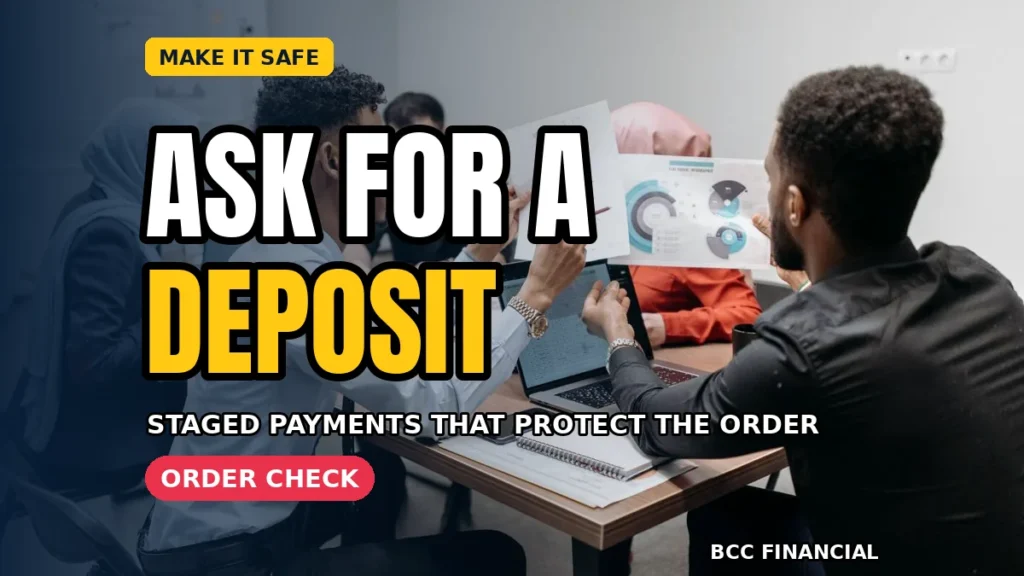
If your should you accept a big order cash flow check shows a risky gap, change the terms first. A deposit that covers your committed upfront costs, followed by staged payments at clear milestones, turns one large, late payment into a funded sequence. The customer shares the timing risk that their order creates.
Put the stages in writing before work starts: amounts, milestones and dates, plus what happens if a stage is late. Our guide to setting a deposit policy for a service business covers wording and habits that make deposits feel normal and professional rather than apologetic.
Questions to ask the customer before you sign
Ask who approves payment, what their payment process needs from you, and when payments are actually released. A large organisation may pay reliably but slowly and only with exact paperwork. Knowing that in advance lets you price, schedule and invoice correctly from day one.
The U.S. Small Business Administration offers general guidance on managing business cash flow and customer terms, which reinforces the same point: agree terms before work begins. A customer who will not discuss payment timing at all is giving you information, and a should you accept a big order cash flow check should count that silence as a warning sign.
When no is the right, professional answer
Say no, or not yet, when the upfront gap exceeds what you can fund safely, when payment terms cannot be improved, or when taking the order would damage service to the customers who sustain you every month. Decline early and politely: a should you accept a big order cash flow check that fails is a reason, not a rejection of the customer.
A timely no protects wages, suppliers and your reputation. It also keeps the door open: businesses remember who was honest about capacity far longer than they remember who said yes and then struggled, late and apologising, through their biggest order.
Frequently Asked Questions
How do I know if a big order is too big for my cash flow?
Lay out costs and payments week by week. If the order’s running balance goes further negative, for longer, than your reserves and agreed facilities can cover, it is too big on those terms.
What deposit should I ask for on a large order?
A practical starting point is enough to cover the costs you must commit before the first milestone payment. State stages, amounts and dates in writing before work starts.
Is it unprofessional to decline a big order?
No, if you do it early and clearly. Accepting work you cannot fund or deliver well harms the customer more than an honest refusal or a later start date.
What if the customer is a large company with fixed payment terms?
Ask about their process and realistic payment dates before accepting, then judge the order using those dates. Reliable but slow payment still creates a gap you must fund.
Conclusion
Measure the gap between money out and money in, protect your existing customers, and use a deposit or staged terms to close any risky gap. That is the whole should you accept a big order cash flow check, and it turns a nerve-wracking decision into a clear one.
If growth orders are stretching your cash in ways that feel uncomfortable, you are welcome to explore the cash and financial management help described on the BCC Financial website and start a general conversation with the team.
Disclaimer: This article is general educational information only and is not personal financial advice. Credit and contract decisions depend on your circumstances; speak to a qualified professional about your specific situation.