Cash Collection for EV Charger Installers: Survey First, the Charger Ordered to the Fuse Board and Payment on the First Charge
An EV charger job starts long before the drill comes out. The installer visits, checks the fuse board, works out whether the supply can carry the charger, and only then orders the unit. The money should follow that same order, and a sound cash collection EV charger installer survey fuse board payment routine makes sure it does: the survey is paid for, the charger is ordered once a deposit is in hand, and the balance is paid when the car takes its first charge. When those steps run in that order on every job, the installer is never out of pocket on a charger the customer has not paid for.
How the cash collection EV charger installer survey fuse board payment Routine Works From Survey to First Charge
Charge for the survey, and say so when the customer books it. A survey takes your time, your travel and your judgement, and a customer who gets it free will book three installers and pick the cheapest quote. A modest survey fee, taken when the visit is booked, sorts the serious customers from the tyre-kickers, and it can be taken off the final bill when the job goes ahead, so the customer who proceeds loses nothing.
The fuse board is where most EV jobs are won or lost, and it is also where the price can move. Check the spare ways, the main fuse rating and the earthing, and tell the customer on the spot whether the board can take the charger or needs an upgrade. A clear cash collection EV charger installer survey fuse board payment routine keeps the survey, the board and the price in the same conversation, so nothing is discovered after the charger is already on order.
What the survey should settle
A good survey answers four questions before you leave the house: can the fuse board carry the charger, where will the charger sit and how far is the cable run, is there a route for the cable that does not cross a path or a flower bed, and does the customer want a tethered unit or a socket. Write the answers on the survey sheet, get the customer to sign it, and price the job from that sheet alone.
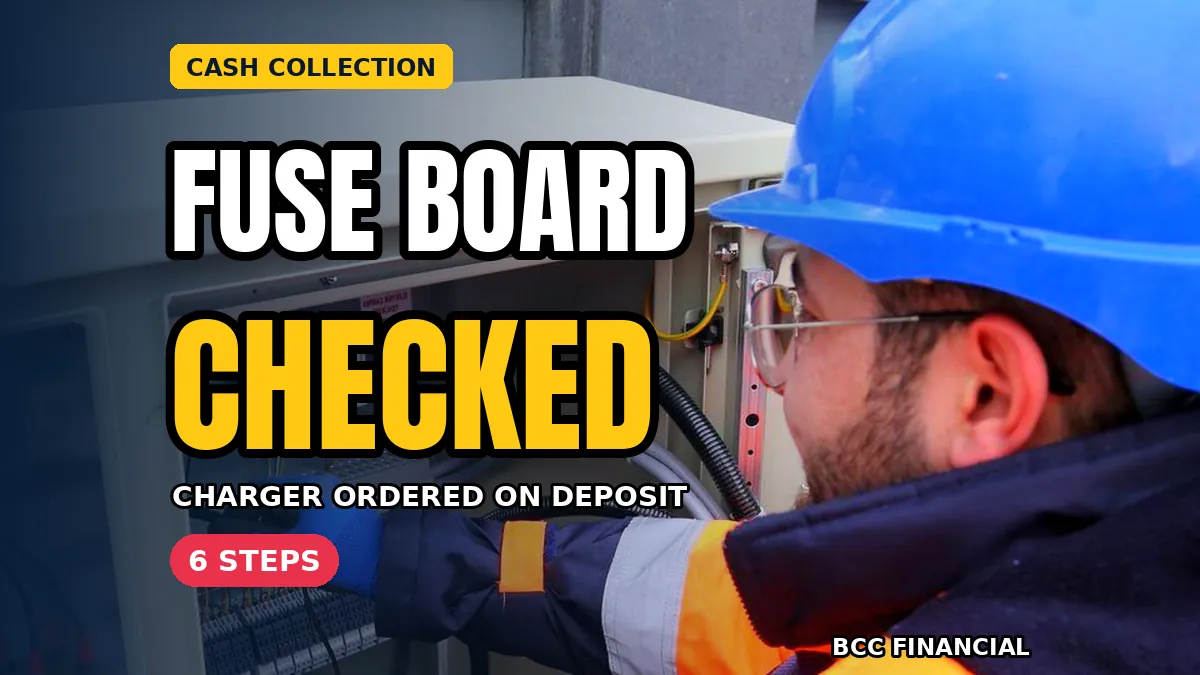
The Charger Ordered to the Fuse Board Under the cash collection EV charger installer survey fuse board payment Routine
Order the charger only after the deposit has cleared, and size the deposit to cover the unit itself. The charger is ordered to one house, one fuse board and one cable length, and a customer who cancels after the order is placed leaves you with a unit you may not be able to sell on. Take the deposit at the survey, wait for it to clear, and only then place the order with your supplier. That is the discipline at the centre of a cash collection EV charger installer survey fuse board payment routine.
Keep your lead times honest, because a charger that arrives late costs you a fitting slot and a customer who has already waited weeks. Ask the supplier for a delivery date in writing, pass that date to the customer with a few days in hand, and call the customer the moment the unit arrives. A customer who hears bad news early will wait; a customer who hears it at the door will not, and a good cash collection EV charger installer survey fuse board payment routine is built on suppliers and installers who say what they mean.
Payment on the First Charge
The balance is due when the charger is fitted, tested and the car takes its first charge with the customer watching. Run the first charge together, show the customer the app and the charging light, and take the payment before you pack your tools. Never leave a working charger unpaid while the customer promises to transfer the money later, because the moment the car is charging your leverage has gone. A sound cash collection EV charger installer survey fuse board payment routine treats the final payment as part of the handover, not as a favour to chase later.
Frequently Asked Questions
What should a cash collection EV charger installer survey fuse board payment routine cover first?
A cash collection EV charger installer survey fuse board payment routine covers three moments where money changes hands: a paid survey at the booking, a deposit before the charger is ordered, and the balance on the day the car takes its first charge. If those three are written down and used on every job, most of the losses in an EV charger business disappear without any extra effort. Put the survey fee, the deposit and the balance on the same sheet, so the customer sees the whole price journey at the first visit.
Should the survey be free?
No, unless you enjoy driving to houses that will never become jobs. A modest survey fee, taken at booking and taken off the final bill when the job goes ahead, costs the genuine customer nothing in the end and keeps the time-wasters away. Say the fee and the deduction in the same breath when the customer books, and write both on the booking confirmation, so the customer knows the survey is a step towards the job, not a charge for a chat. That is how a cash collection EV charger installer survey fuse board payment routine treats the survey fee.
What if the fuse board needs an upgrade?
Tell the customer at the survey, price the upgrade separately, and get it agreed in writing before you order the charger. An upgrade can cost as much as the charger itself, and a customer who hears about it on fitting day will feel ambushed. If the customer will not pay for the upgrade, walk away from the job with the survey fee in hand, because a charger fitted to a board that cannot carry it is a job that will come back to haunt you.
Survey, Order, Charge, Paid
An EV charger business runs on careful surveys and tidy fuse boards, and neither is an excuse for loose money habits. Charge for the survey, take a deposit before the charger is ordered, and collect the balance when the car takes its first charge. That is the whole of a sound cash collection EV charger installer survey fuse board payment routine. If survey notes and invoices are piling up faster than chargers, BCC Financial can lift the routine off your desk — the reminders, the records and the follow-up calls — so you can get back to the next fuse board.
More from BCC Financial: cash collection for electricians and certificates and cash collection for solar installers, plus the Small Business Administration on managing your business.
Disclaimer: Read this article as general guidance for small business owners, not as advice about your own situation. It is not legal, tax or financial guidance, and the rules on electrical work, permits and deposits differ by location. Confirm the rules that apply to your area, or talk to a qualified adviser, before you change how you charge.