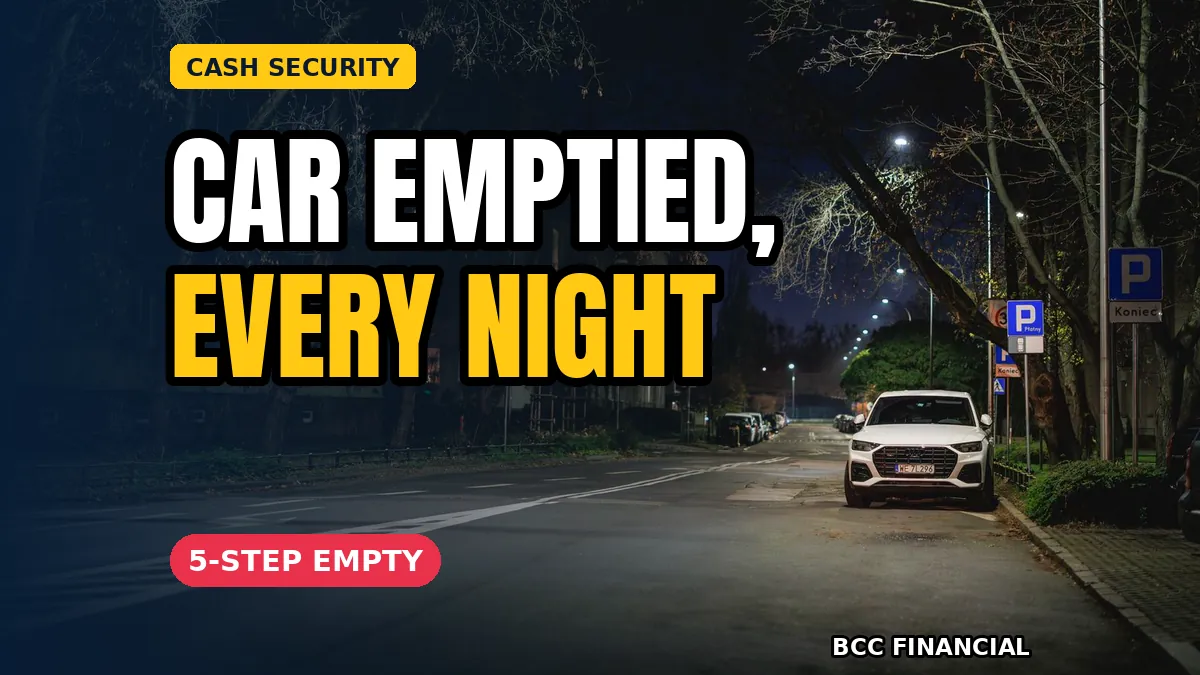
Cash in the Car Overnight: The Van Break-In Risk and the Nightly Empty
The van is parked outside, the day’s cash is still inside it, and the street is dark. It feels harmless — the doors are locked, the bag is under the seat, and you will only be a few hours. But a locked van with cash inside is exactly what a thief hopes to find, and a window takes seconds to break. That is the risk behind a cash in car overnight van break in risk nightly empty habit: the only safe amount of cash to leave in a vehicle overnight is none at all. This guide sets out the nightly empty routine, so the van is never worth breaking into.
How a cash in car overnight van break in risk nightly empty Habit Forms
The habit forms the first time you are tired and decide to leave the bag until morning. Once is easy to excuse, twice becomes a routine, and within a month the van is carrying the day’s takings every night without anyone thinking about it. A cash in car overnight van break in risk nightly empty routine breaks that slide by making the empty a fixed part of closing: the cash comes out with the keys, every night, without exception, even when you are tired and even when the amount is small.
Thieves do not need to know there is cash in the van. They look for signs: a bag on the seat, a charging cable, a sat nav mount on the windscreen, a handful of coins in the cup holder, or tools in the back. Any one of those is a reason to try the door, and a locked door is no more than a few seconds of work for someone with a tool. An empty van with nothing on show gives them no reason to start.
The five steps of the nightly empty
Run these five steps every night before you lock up. First, take the cash bag inside, including the till float and any loose notes or coins. Second, take in the paperwork, the card reader, and anything with your name or the business name on it. Third, remove phone mounts, cables, bags and tools, or lock tools in a separate secure store. Fourth, open the glovebox and leave it empty, so anyone looking in can see there is nothing to take. Fifth, lock the van, check the doors, and park it in the light where people pass. A cash in car overnight van break in risk nightly empty check done this way takes five minutes and saves a broken window.

The Signs That Invite a Break-In Under a cash in car overnight van break in risk nightly empty Routine
Learn to see your van the way a thief sees it. A jacket on the seat suggests a wallet in the pocket. A bag in the footwell suggests a laptop or a cash tin. A sat nav mount on the glass suggests the device is in the glovebox. A cash in car overnight van break in risk nightly empty eye is trained on these small clues, and the nightly empty removes them one by one until the van looks like what it should look like: an empty vehicle with nothing inside worth a smashed window.
Parking matters as much as emptying. Choose a lit spot near people and cameras, not a dark corner at the end of the street, and vary the spot when you can so the van is not always in the same place at the same time. A van parked under a street light, with an empty interior and nothing on the seats, is a poor choice for a thief who has a whole street of cars to look at.
The Morning After: Finding the Van Broken Into
If the van has been broken into, do not touch anything inside it. Call the police first, then make a list of what is missing, and take photographs of the damage before anything is moved. Tell your insurer the same day, and keep the police reference number with the claim. A broken window is bad enough; a claim delayed because nobody wrote down what was taken is worse.
Use the break-in to fix the routine, not just the window. Ask what the thief found, and how they knew it was there: a bag left in view, a mount on the glass, or cash that should have come inside the night before. Write the answer down and change the nightly empty to cover it. A cash in car overnight van break in risk nightly empty routine that learns from a break-in is worth more than one that only works on quiet nights.
Frequently Asked Questions
Is it ever safe to leave cash in the van overnight?
No, take it inside every night, even when the amount is small and the van is locked. A cash in car overnight van break in risk nightly empty habit works because there is nothing to steal, and even a few coins in a cup holder can be enough to make a thief try the door.
What if I finish late and the office is shut?
Take the cash home with you and lock it away there, in a safe or a locked drawer, and bring it back in the morning. A cash in car overnight van break in risk nightly empty routine does not end at the office door — the cash travels with you until it is somewhere secure.
Should I leave the glovebox open?
Yes, leave it open and empty, so anyone looking through the window can see at once that there is nothing inside. A cash in car overnight van break in risk nightly empty van with an open, empty glovebox tells a thief the search is already over.
Empty It Every Night, Without Exception
Cash left in a van overnight is an invitation, and a locked door is not an answer to it. Take the money inside, take the bags and the mounts with it, leave the glovebox open and empty, and park where the light is. That is the whole of a sound cash in car overnight van break in risk nightly empty routine, and it costs five minutes a night. If the nightly counts and the vehicle records keep piling up, BCC Financial can take the routine off your hands — the sheets, the checks and the tidy files — so you can get back to the work that pays.
Keep reading on BCC Financial: securing cash in a vehicle and cash handling on a building site, plus the Small Business Administration on managing your business.
Just so you know: this article is general information about keeping cash out of vehicles overnight, and it is not advice about your own insurance cover or security arrangements. Policies can differ on cash left in a vehicle, so check your own cover and your employer’s rules before you change how you handle the nightly takings.