Offering Cashback at the Till: The Float It Eats, the Fees Involved and the Daily Limit That Keeps It a Service, Not a Drain
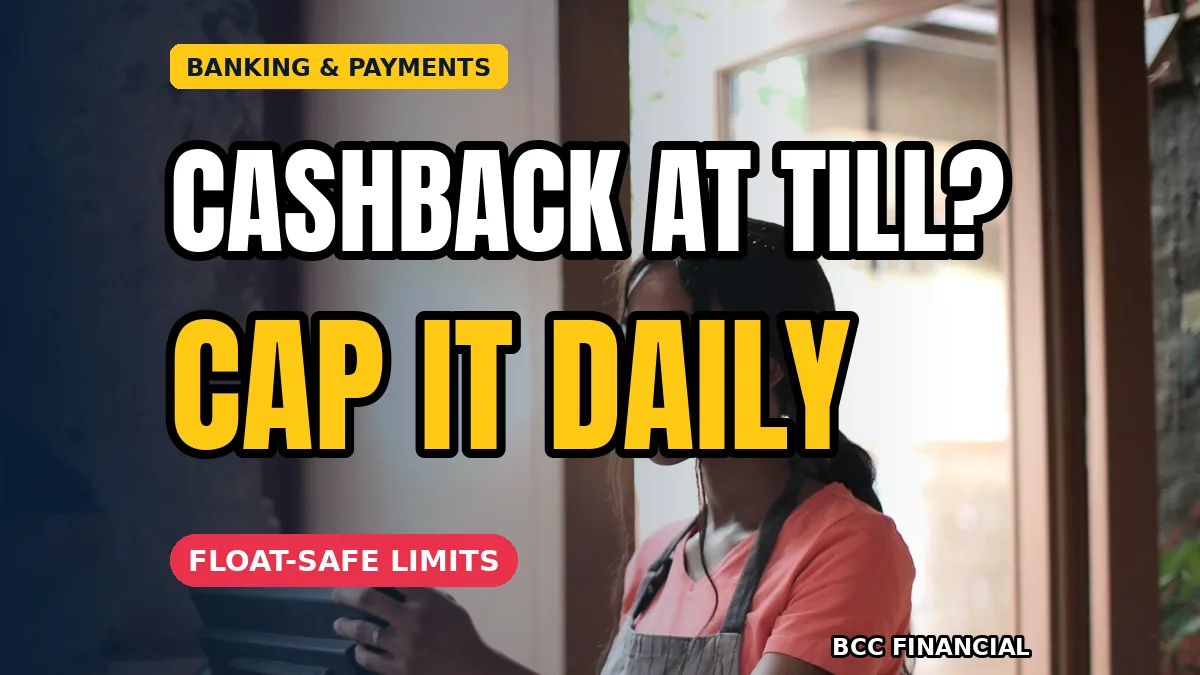
Offering cashback at the till sounds like a small kindness: a customer pays by card, asks for a little cash back, and walks out happy. Behind that small kindness sits a real cost, because every cashback payout is float leaving the drawer, and the card transaction that carries it still has to be recorded and paid for. A clear cashback at the till float fees limit plan keeps the service generous without letting it drain the till dry.
The question is not whether cashback is a good idea, but whether your float can carry it. The cashback at the till float fees limit routine below sets a daily cap, a per-customer limit and a floor below which cashback simply stops, so the next cash customer is never left waiting for change that has already walked out of the door.

A Cashback at the Till Float Fees Limit Plan in Five Steps
Agree these limits in writing before the service starts, and make sure every person on the till knows them. A limit nobody knows about is no limit at all.
- Set a daily cashback cap for the whole shop, and write it on the till sheet.
- Set a per-customer limit, so one large request cannot take the day’s allowance.
- Set a float floor: when the drawer reaches it, cashback stops for the day.
- Record every cashback payout with the sale it belongs to, at the time it happens.
- Review the cap weekly, and raise or lower it with the week’s takings.
The Float It Eats: Why Cashback Is Not Free Cash
Cashback is paid from the same float that gives change to cash customers. A busy morning of cashback can quietly empty the drawer of the notes and coins the afternoon will need, and the first sign of trouble is often a cash customer waiting while someone hunts for change. Count the float at the start of the day, track cashback payouts as they happen, and keep an eye on the balance as the day goes on.
That is the heart of a cashback at the till float fees limit routine: the float is treated as a working tool with a floor, not as a pot to dip into until it is gone. When the floor is reached, cashback pauses, the till keeps serving cash customers, and the service resumes the next day with a fresh float.
The Fees Involved: Check Your Own Agreement
Under a cashback at the till float fees limit plan, cashback travels on a card transaction, and card transactions carry costs under your provider’s agreement. Read that agreement before you start, and ask your provider what a cashback transaction costs you, how it appears on your statement, and whether any part of it is treated differently from an ordinary card sale. Do not guess at the cost, and do not assume it is the same for every provider.
The Consumer Financial Protection Bureau’s page on what contactless payment is is a helpful reminder that card payments at the till come in several forms, and each one leaves its own record. Whatever the form, the cashback part of the sale should be recorded in your own till record the same day, so the day’s totals still reconcile.
The Daily Limit That Keeps It a Service, Not a Drain
In a cashback at the till float fees limit plan, a daily limit turns cashback from an open tap into a managed service. Set the cap low at first, watch how often it is reached, and adjust it with experience rather than optimism. A per-customer limit matters just as much, because it stops one generous payout from using the allowance that several smaller customers would have shared.
Our guide to tap-to-pay and contactless limits explains what counter staff need to know about card payment limits at the till, and cashback sits naturally beside that knowledge. Train the team to offer cashback cheerfully up to the limit, and to decline politely once the floor is reached, with a short sentence they can all use.
When the Float Runs Low: The Busy-Day Rule
Busy days are when a cashback at the till float fees limit plan is tested hardest, because the float is working hardest at exactly the moment customers ask for more of it. Agree a busy-day rule in advance: when the drawer hits its floor, cashback stops, no exceptions, and the team focuses on serving the queue. Put the rule on the till sheet, so nobody has to make the call under pressure.
Card money does not always arrive at once, either, and a provider may hold part of it back for a time. Our guide to when your card provider holds a reserve explains how to plan around money that is yours but not yet released, and the same planning habit applies to the card side of cashback.
FAQ
How do I set the daily cashback cap?
Start low, watch how often the cap is reached, and adjust it with the week’s takings. A cashback at the till float fees limit cap that is reviewed weekly stays honest, while one set once and forgotten slowly drifts out of step.
Should cashback be offered to every card customer?
Offer it while the float allows, and pause it politely once the floor is reached. A short, friendly sentence, agreed in advance, keeps the refusal from feeling personal.
Do I need to record each cashback payout?
Yes, with the sale it belongs to, at the time it happens. The record is what lets the day’s totals reconcile, and it shows at a glance how much float the service used.
What if a customer asks for more than the per-customer limit?
Offer the limit, explain it briefly, and suggest the nearest cash machine for the rest. A clear limit, applied the same way to everyone, is fair and easy to explain.
Conclusion: A Small Service, Kept Inside Its Limits
Cashback at the till is a kind service when it stays inside its limits, and a quiet drain when it does not. A cashback at the till float fees limit plan — a daily cap, a per-customer limit, and a float floor that stops the service before the drawer is empty — keeps it a service.
If till habits are one of several money routines you are tightening this year, BCC Financial’s Banking and Payments guides apply the same cap-and-record discipline to the rest of your counter. Start with your float floor, and put the limits on the till sheet today.
This article is general educational information only and is not financial advice. Card costs and limits vary by provider, so check your own agreement and consider seeking professional advice for decisions about your own business.