Courier Cash on Delivery: The Parcel, the Payment and the Check Before the Money Leaves
A parcel arrives, the courier holds out a hand for payment, and the buyer has seconds to decide. Paying at the door feels simple, but the money should only leave once the parcel has been checked, the amount has been agreed and the receipt is ready. A courier cash on delivery routine gives the buyer a short list of checks to run before paying, so a damaged box, a wrong item or a surprise charge is caught on the doorstep instead of discovered after the courier has gone. This guide explains the checks in order, for buyers and for small sellers who send goods this way.
How a courier cash on delivery Payment Is Supposed to Work
The buyer orders goods and chooses to pay when they arrive, the seller sends the parcel with the amount due marked on it, and the courier collects that amount at the door and hands over the parcel. The seller then receives the money from the courier or carrier, usually after a short delay. A courier cash on delivery sale works when every link in that chain is visible: the order, the amount, the parcel and the receipt all agree before any cash changes hands.
Trouble starts when one of those links is missing. A parcel with no amount marked on it leaves the buyer guessing what to pay. A courier who cannot show an order number or a receipt leaves the buyer with no proof of payment. A seller who never sees the courier’s report cannot tell which parcels were paid for and which were refused. Each of those gaps is small on its own, and each one is easy to close with a written record kept at the door.
The six checks before the money leaves
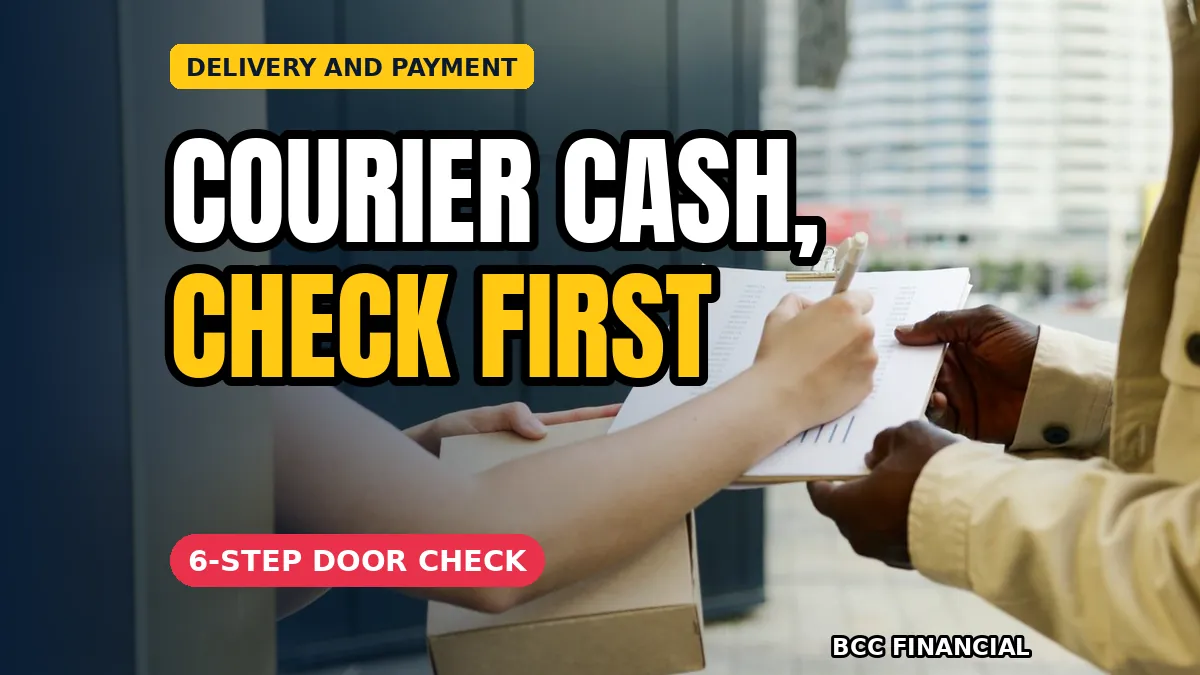
Run these six checks in the same order every time, and pay only when all six pass. First, check that the name and address on the parcel match the order. Second, check that the amount due matches the order total, including any delivery charge shown at checkout. Third, look at the outside of the parcel for crushing, wet patches or signs it was opened. Fourth, open the parcel and check the item against the order while the courier waits. Fifth, count the cash out loud and hand it over only after the item checks out. Sixth, take a receipt that shows the date, the amount and the order number, and keep it with the order.
The Check That Matters Most in a courier cash on delivery Handover
The fourth check, opening the parcel before paying, is the one people skip most often, and it is the one that saves the most money. A sealed box can hide a wrong size, a broken part or an empty space where the item should be, and once the courier has left with the cash, getting that money back means phone calls, forms and waiting. A courier cash on delivery buyer who opens the box at the door can refuse a wrong or damaged item on the spot, without losing a penny.
Some couriers say the parcel cannot be opened before payment, and some sellers set that rule in their terms. If that is the case, read the terms before ordering, and check the outside of the parcel with extra care: weigh it in your hand, look for tape that has been cut and resealed, and note any damage on the courier’s own record before you pay. A note written on the delivery record at the time is worth far more than a complaint made hours later.
When the Parcel Is Wrong, Short or Damaged
Refuse the parcel calmly and say why, in words the courier can write down. A short delivery, where one item from a larger order is missing, is worth the same treatment: pay only for what arrived, if the seller’s terms allow it, or refuse the whole parcel and ask for a fresh delivery. A courier cash on delivery refusal is not a quarrel; it is a record. Ask the courier to note the refusal and the reason, keep your copy of that note, and tell the seller the same day, with the order number and the note attached.
Sellers face the other side of the same problem. A refused parcel comes back, the courier’s report shows why, and the money for that order never arrives. Keep a simple log of refusals with the reason for each one, and look for a pattern: the same product arriving damaged points to packing, while refusals for the wrong item point to picking. A log with ten refusals and their reasons is worth more than a complaint about one bad delivery.
Frequently Asked Questions
What should a courier cash on delivery buyer check first?
Check the name, address and amount on the parcel against the order before anything else. If the parcel is for someone else, or the amount is higher than the order total, stop and ask the courier to check with the sender. A courier cash on delivery payment should never start with a surprise on the label.
Can I open the parcel before I pay the courier?
Often yes, but it depends on the seller’s terms and the courier’s rules, so check before you order. Where opening is allowed, do it while the courier waits and check the item against the order. A courier cash on delivery check at the door is the cheapest inspection a buyer will ever get.
What if the courier has no receipt to give me?
Do not pay without some written proof. Ask the courier to write the date, amount and order number on paper and sign it, or take a photo of the parcel label and the payment together. A courier cash on delivery receipt is the only proof that the money changed hands, and without it a later dispute is one person’s word against another’s.
A Doorstep Habit That Protects Both Sides
Cash on delivery works when the handover is treated as a small transaction with its own checks, not as a casual exchange at the door. Match the parcel to the order, match the amount to the total, look at the box, open it when you can, count the money out loud and keep the receipt. That is the whole of a sound courier cash on delivery routine. If chasing delivery payments and refused parcels is eating into time you would rather spend running your shop, BCC Financial can take the routine off your hands — the records, the follow-ups and the awkward conversations — so you can get back to the work that pays.
Two more guides from BCC Financial: paying cash at the door on delivery and short or damaged deliveries and the credit note, plus the Small Business Administration on managing your business.
Heads up: this piece is general information for buyers and small sellers about paying on delivery, and it should not be read as advice for your own orders or contracts. Delivery terms can vary by seller and by carrier, so read the terms for your order and ask the seller directly if anything is unclear before you pay.