When the Float Is Wrong at the End of the Day: Recount, Check the Card Total and Record the Difference Honestly
A float that will not balance at the end of the day is not yet a theft and not yet a mistake. It is a difference, and a difference has a cause that can usually be found in ten minutes. A float wrong end of day recount card total record difference routine recounts the cash by denomination, checks the card total against the till report, and writes the difference down honestly, so the day ends with a record instead of a row.
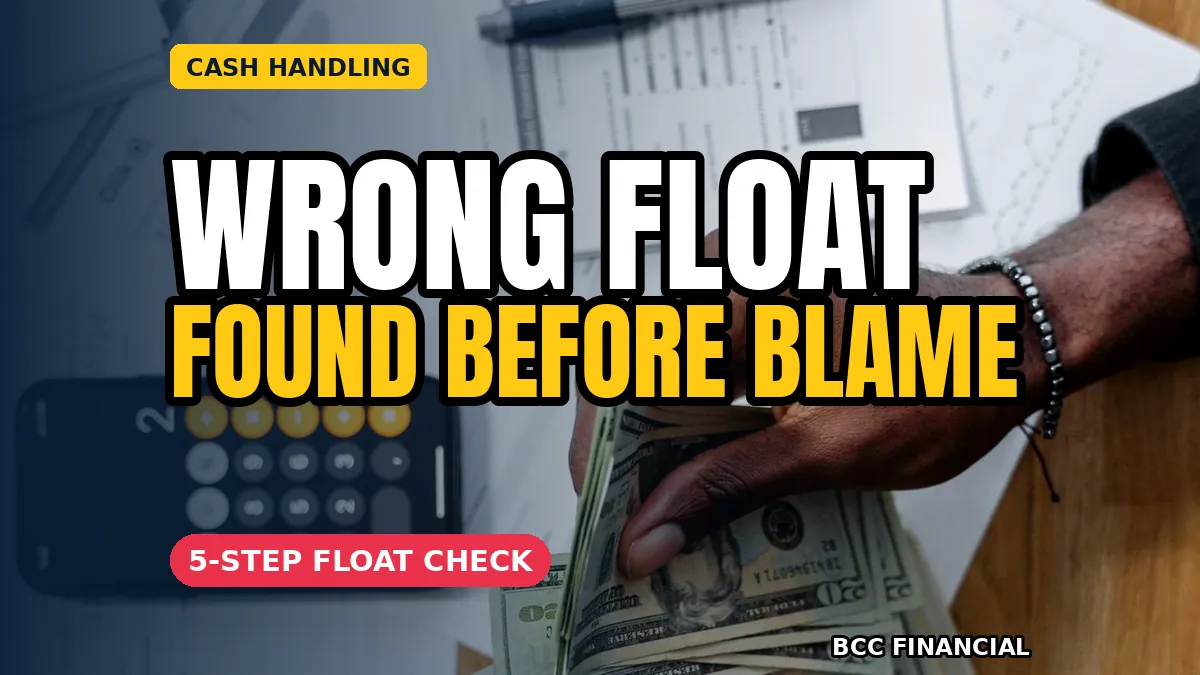
A float wrong end of day recount card total record difference check that starts with a fresh count
The recount is the first step, not the last resort. Put the cash back in the drawer, clear the counter, and count again from the largest notes down to the smallest coins, writing each denomination on the cash-up sheet as it is counted. A recount done slowly, without looking at the till report first, is a recount that can actually find the error.
- Count the cash again by denomination, largest notes first.
- Take the float out, and write the takings total on the sheet.
- Check the card total against the till report for the day.
- Look for refunds, voids and cash paid out that were not recorded.
- Write the difference down, with the date and the counter’s initials.
Recount: The Second Count That Finds the Error
Most wrong floats are counting slips, and a second count finds them. A float wrong end of day recount card total record difference habit recounts the notes and the coins separately, checks for notes stuck together, and counts the coins by denomination rather than by weight or by guess. A recount that matches the first count is useful too, because it rules the counting out and points the search elsewhere.
Count away from the till report. A counter who knows the expected total will count towards it without meaning to, and a count done blind is the only count that can be trusted. Write the counted total down before looking at what the till says should be there.
Check the Card Total: The Sale That Was Counted Twice
A sale taken by card and counted as cash is the commonest cause of a wrong float after a counting slip. A float wrong end of day recount card total record difference check compares the card terminal’s total with the till report, line by line where the day was busy, and looks for a card sale that was rung up as cash or a cash sale that was rung up as card. A payment counted in the wrong column is a float that will not balance until the column is put right.
Check refunds and voids next, because a refund handed over in cash without a note looks exactly like money gone missing. A refund with no record is a difference nobody can explain, and a till report that shows every void and refund is a report the count can be checked against.
Record the Difference Honestly: The Sheet That Tells the Truth
A difference that is written down is a difference that can be managed. A float wrong end of day recount card total record difference sheet records the expected total, the counted total and the difference, whether the drawer is short or over, so the day’s record is honest even when the day’s money is not. Our guide to a Friday cash sealing routine shows the same habit of closing the week with a written record.
Never top the drawer up from your own pocket to make it balance, and never take the overage home. A float wrong end of day recount card total record difference routine that records the true counted figure keeps the books honest, and our guide to a chargeback evidence pack shows why a written record matters when a payment is disputed later. The Consumer Financial Protection Bureau’s debt collection guidance explains the same habit of keeping money owed in view.
When the Difference Keeps Coming Back
A difference once is a mistake, and a difference every day is a pattern. A drawer that is short on the same shift, with the same cashier or at the same hour, is a drawer with a process problem, and the process should be watched before anyone is blamed. A pattern is a fact the record can show, and a fact is fairer than a suspicion. A float wrong end of day recount card total record difference log is the record that shows it.
Look at the pattern in the sheets before speaking to anyone about it. A float wrong end of day recount card total record difference log that shows the same small shortfall on the same shift points to a step being missed, and a missed step can be retrained where a suspicion can only cause a row.
FAQ
How big a difference should be investigated?
Every difference should be written down, and any difference larger than a few coins should be looked into the same night. A float wrong end of day recount card total record difference routine treats a small difference as a note on the sheet and a larger one as a recount, a card check and a look at the refunds, all before anyone goes home.
Should the till be counted by two people?
Yes, wherever the staffing allows, and the second person should count blind. Two counts that agree are worth more than one count done twice by the same hands, and a second pair of eyes is the cheapest check a till can have.
What if the drawer is over rather than short?
Record it the same way, and look for a sale that was charged but not rung up. A float wrong end of day recount card total record difference that is over is just as much a warning as one that is short, because it often means a customer paid for something the till never recorded.
Can the float amount be changed to hide a difference?
No, and the float should stay the same every day for exactly that reason. A fixed float makes a difference visible at once, and a float that changes to suit the count is a float that hides whatever went wrong.
Conclusion: Recounted, Card Checked, Difference Recorded Honestly
A sound float wrong end of day recount card total record difference routine is three habits: the cash recounted by denomination before anyone looks at the report, the card total checked against the till, and the difference written down honestly whether the drawer is short or over. Then the till can be believed.
A wrong float is only one end-of-day difference that needs an honest record, and BCC Financial’s Cash Handling Security guides cover other closing routines where the same discipline keeps the takings honest.
This article offers general educational information only and is not financial advice. Every small business runs differently, so check the routine against your own till sheets before changing it.