
Invoice Payment Terms: How to Get Paid Faster Without Chasing Clients
Most late payments are not caused by bad clients. They are caused by vague invoices. When an invoice does not say exactly when payment is due, how to pay, and what happens next, it quietly joins the bottom of your client’s pile. Clear invoice payment terms fix that before the work even starts: they set the due date in plain words, make paying effortless, and give you a polite, agreed basis for every reminder you send later.
This guide shows you how to choose terms that suit your cash flow, how to phrase them on quotes and invoices, and how to follow up calmly when a due date passes.
Invoice Payment Terms: Start With the Terms, Not the Invoice
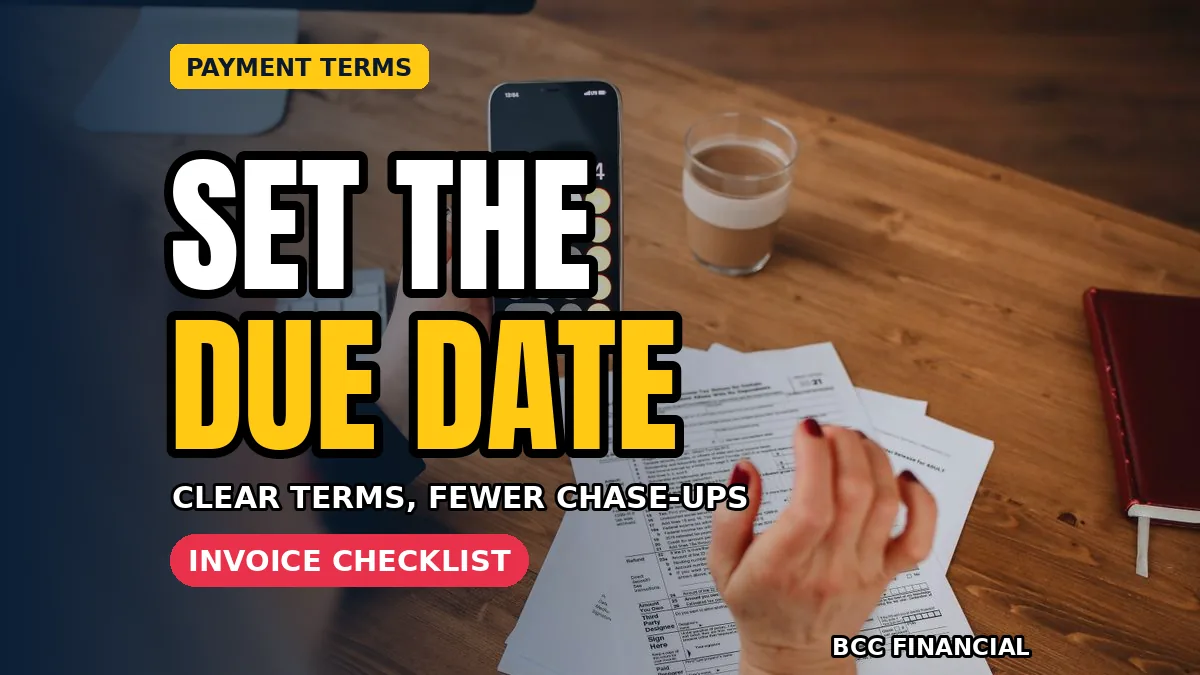
Payment terms work best when the client agrees to them before the job begins. Put your invoice payment terms in your quote, proposal or contract, then repeat them word for word on the invoice itself. A client who has already accepted your terms cannot be surprised by them later, and your reminders can simply point back to what was agreed.
The five things every set of terms should state
- The due date: a specific calendar date, not just a number of days.
- How to pay: the payment methods you accept and the details needed to use them.
- What the charge covers: a short, clear description of the work or goods.
- What happens if payment is late: stated calmly and in advance, following the late payment approach in the article linked below.
- Who to contact: a named person or inbox for billing questions, so queries do not stall payment.
Choosing a Due Date That Protects Your Cash Flow
The right due date depends on your costs. If you pay staff and suppliers within days of finishing a job, a long payment window means you are funding your client’s business out of your own pocket. Many service businesses use shorter terms for small jobs and staged payments for larger ones.
Common term styles and when they fit
- Due on receipt: suits small, one-off jobs and new clients.
- Net 7 or Net 14: a short window that keeps money moving for regular services.
- Net 30: common for larger organisations with fixed payment runs; price the wait into your planning.
- Deposit plus balance: part payment before work starts, the rest on delivery — useful when you must buy materials or book staff time up front.
- Milestone payments: for longer projects, split the total into stages so cash arrives as work progresses.
Whichever style you choose, write the actual date on the invoice: “Due 14 March” is harder to misunderstand than “Net 14”.
Sample Wording You Can Adapt
Good invoice payment terms are short, polite and complete. Adapt this example to your own business and local requirements:
- “Payment is due within 14 days of the invoice date, by bank transfer to the account shown below. Please use the invoice number as your payment reference.”
- “For projects above an agreed value, a deposit is payable before work begins, with the balance due on completion.”
- “If anything on this invoice looks incorrect, please tell us within 5 days so we can correct it before the due date.”
That last line matters more than it looks: many “late” payments are simply invoices stuck on a small query nobody raised.
Make Paying Effortless
Every obstacle between your client and the “pay” button adds days. Offer the mix of methods your clients actually use — bank transfer, card and payment links are covered in our guide to payment methods for small businesses — and print the details on the invoice itself, not in a separate document the client has to hunt for. Always include the invoice number and ask the client to quote it as the reference, so you can match the payment in seconds.
A Calm Reminder Sequence
Reminders are part of your invoice payment terms, not an apology. A simple, pre-written sequence keeps the tone professional:
- 3 days before the due date: a friendly note confirming the invoice arrived and the date payment is due.
- On the due date: a short thank-you and a copy of the invoice, in case the original went astray.
- 7 days after: a firmer message restating the amount, the original terms, and asking if anything is holding payment up.
- 14 days after: a final reminder that refers to your agreed late payment terms and proposes a date to resolve it.
If late payment becomes a pattern, set a written policy rather than improvising each time — our guide to building a late payment policy for small businesses walks through the clauses. And because faster invoicing only helps if the money is planned for, pair these terms with the habits in our article on how to improve cash flow management.
Watch the short video below for deposits and payment terms that help businesses get paid sooner.
Frequently Asked Questions
What are invoice payment terms?
They are the conditions printed on your quote and invoice that state when payment is due, how the client can pay, and what happens if payment is late. Clear terms remove guesswork for both sides.
How quickly should I send an invoice?
As soon as the work is delivered or the milestone is reached. Every day you wait to invoice is a day added to the wait for payment, whatever invoice payment terms you set.
Should I offer a discount for early payment?
Some businesses do, and it can speed up payment from clients who value the saving. Treat it as a cost decision: work out what the discount costs you across a year and compare it with the cost of waiting or borrowing.
What if a client asks for longer terms?
Consider the whole relationship: the size of the work, their payment history and your own costs. If you agree to a longer window, confirm it in writing and adjust your cash flow forecast so the wait does not surprise you.
Can I change my terms for existing clients?
Yes, with notice. Explain the change, give a start date, and apply the new terms to new work from that date. Keep the conversation friendly and factual.
A Practical Next Step
Pick your standard invoice payment terms today, save them as a template, and use them on every quote and invoice from now on. One clear page of terms will save you hours of chasing. The U.S. Small Business Administration’s guidance on managing business finances also treats invoicing as part of day-to-day money management. If you would like help reviewing how your invoicing fits your wider cash flow, BCC Financial Management Services can talk it through with you in plain language, with no obligation.
Disclaimer: This article is general educational information only and is not financial advice. Consider your own circumstances and seek professional advice where appropriate.




2 Comments