Phishing Awareness for Finance Staff: Spotting the Email, the Call and the Fake Invoice Before Money Moves
A finance inbox is a busy place, and that is why it is a target. Orders, remittances and supplier chases arrive all day, and a fake message only has to look ordinary once to slip through. A phishing awareness finance staff fake invoice email routine gives every person who handles money a pause before they click, call or pay. It is about staff who know what a real message looks like, who check before they act, and who report the odd one instead of deleting it in silence.
A phishing awareness finance staff fake invoice email habit that starts with the pause
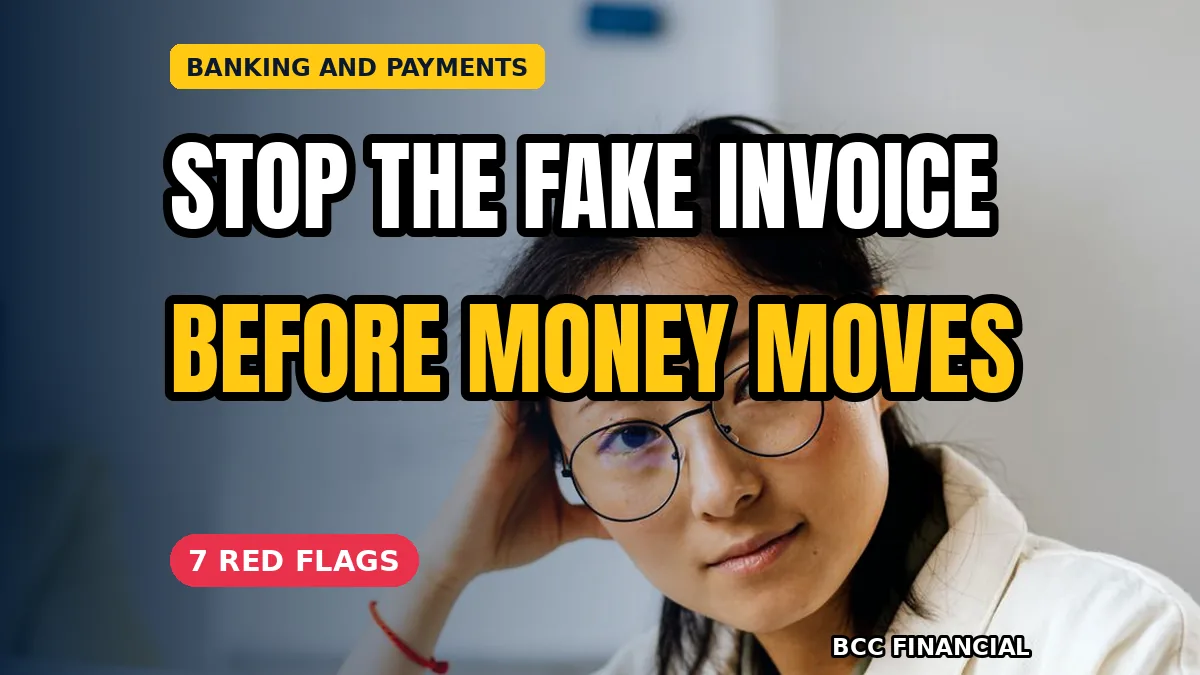
- Stop when a message creates urgency, secrecy or a threat.
- Read the sender address letter by letter, never just the display name.
- Hover over every link before clicking, and distrust shortened links.
- Treat each bank-detail change as a new payee until it is verified.
- Call the supplier back on a number already on file, never the one in the message.
- Open attachments with care, and never enable content to view an invoice.
- Report the message to the right person, and do not delete it first.
The Email: What a Fake Invoice Really Looks Like
A fake invoice usually arrives dressed as routine, with a familiar supplier name, a plausible amount and a polite note. The trap sits in the detail: a bank account that has changed, a reply address that differs by one letter, or a payment link that leads somewhere the supplier has never used. A phishing awareness finance staff fake invoice email check starts with those small details, because the message that looks almost right is the one that costs money.
Staff should also watch for the message that arrives at a rush hour. A fake invoice sent late on a Friday, or just before a holiday, relies on a tired reader who wants the pile cleared. A phishing awareness finance staff fake invoice email habit slows that moment down, so the invoice is checked against the order and the supplier record before it is approved. A few minutes of checking costs far less than the weeks spent chasing a payment that went to the wrong account.
The Call: When the Fraudster Rings Instead of Writing
Not every attack arrives by email. A caller may claim to be a supplier chasing an overdue invoice, a director asking for an urgent transfer, or a bank warning about a blocked account. The voice sounds confident and the pressure to act now is strong. A phishing awareness finance staff fake invoice email culture covers the phone too, because the same trick works just as well through a handset as it does through an inbox.
The defence on a call is simple and never changes. Take the message, thank the caller, and hang up. Then ring the person or supplier back on a number you already hold, and check the request there. A phishing awareness finance staff fake invoice email routine that covers calls as well as messages means no payment is ever approved on the strength of one incoming call alone.
The Fake Invoice and the Call-Back Rule
The call-back rule is the single habit that stops most fake invoices. Any change of bank details, however small and however plausible, is treated as unverified until someone has spoken to the supplier on a number already on file. Our guide to invoice redirection fraud and the call-back rule explains how that one check protects a payment, and a phishing awareness finance staff fake invoice email routine makes the rule part of every working day.
The rule also needs a second pair of eyes. A payment above an agreed level should be prepared by one person and approved by another, so one rushed click cannot move money alone. Our guide to preventing business payment fraud sets out how those checks fit together, and the UK government’s guide to reporting suspicious emails and phishing explains where to report a spotted message.
Training the Team So the Pause Becomes a Habit
Training works best in short, regular sessions rather than one long course that everyone forgets. Ten minutes a month, built around real examples the team has seen, keeps the habit alive far better than a yearly lecture. Show staff a genuine supplier email beside a fake one, and let them find the differences, because a lesson they discover stays longer than a rule they are told.
New starters need the same training in their first week, before they touch payments. A phishing awareness finance staff fake invoice email briefing on day one tells a new joiner that pausing is expected, that asking questions is praised, and that no one is ever blamed for raising a false alarm. The team that reports freely is the team that catches the fraud early.
FAQ
What should finance staff do with a suspicious invoice email?
Leave it alone, click nothing in it, and report it to the person your business has named for such messages. A phishing awareness finance staff fake invoice email report should include the message itself, so it can be checked and shared as a warning. Never delete the message first, because the evidence in it helps the next person who sees one like it.
How can I tell a real supplier email from a fake one?
Compare the sender address with the one on file, check the bank details against the last payment, and look for small changes in spelling or tone. A genuine supplier will expect a call-back, while a fraudster will push you to pay now and ask you not to check. When in doubt, stop and verify through a channel you trust.
Should staff ever pay an invoice from a phone call alone?
No, never on the strength of one call. A phishing awareness finance staff fake invoice email and phone routine treats every call as a message to check, not an instruction to follow. Take the details, ring back on a known number, and only then decide whether the invoice is real.
What happens after a phishing email is reported?
The message is checked, the sender is blocked where possible, and the team is warned so nobody else acts on a copy. If money has already moved, tell the bank at once and record the incident. A report handled well turns one near miss into a lesson the whole team remembers.
Conclusion: Pause, Check, Call Back, Then Pay
A sound phishing awareness finance staff fake invoice email routine is four habits: pause when a message creates pressure, check the sender and the details, call back on a number already on file, and report anything odd. Then the invoice that looks almost right is caught before the money moves.
If the finance team is one of several routines you are tightening this year, BCC Financial’s Banking and Payments guides apply the same discipline to other payment risks, from new payees to approval checks.
This article offers general educational information only and is not financial advice. Every business handles invoices differently, so check the routine against your own suppliers and payment process before changing it.