

Sale or Return: Stock You Do Not Pay For Until It Sells — and the Records That Keep It Honest
Sale or return lets a small shop fill its shelves without paying for the stock first, but the stock is not yours until it sells. A sale or return stock terms records routine takes every delivery in on a signed note, records every sale against the supplier’s line and pays only for what actually sold. When the paper and the shelves agree, the supplier is paid fairly and the shop never pays for stock that is still sitting there.
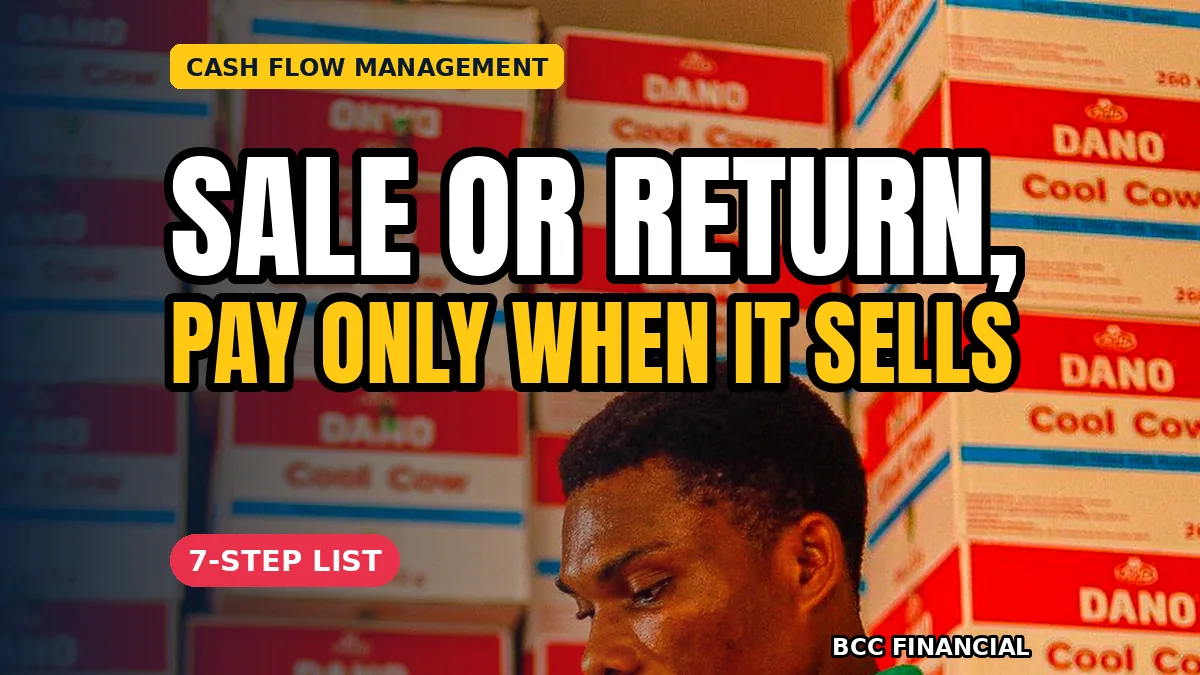
A sale or return stock terms records routine that starts with a signed note
The signed note is the whole routine. Take stock in only against a delivery note with the terms written on it, record each line separately and keep sale-or-return stock apart from stock you own. The note travels with the stock from the delivery to the sale or the return, and nothing about the money is left to memory.
- Take stock in only against a signed delivery note with the terms written on it.
- Record each line separately: item, quantity, price and return date.
- Keep sale-or-return stock apart from stock you own.
- Record every sale against the supplier’s line the same day.
- Count the stock monthly and agree the count with the supplier.
- Return unsold stock before the agreed date, with a signed receipt.
- Pay only for what sold, and file the payment with the sales record.
The Terms: What Sale or Return Really Means
Sale or return means the supplier keeps ownership of the stock until it sells, and the shop is holding it rather than owning it. A sale or return stock terms records habit writes that plainly on the delivery note, with the return date, the price to be paid when it sells and what happens if it is damaged. Terms agreed at delivery are terms that cannot be argued about later.
The return date matters most, because stock that stays past its date stops being sale or return and starts being a bill. A sale or return stock terms records routine that watches the return dates weekly never lets a line slip past its date unnoticed, and the supplier who is told early about a slow line is far easier to deal with than one who is told late.
The Records: One Line Per Supplier, One Sale Per Line
Each supplier gets a page, and each line on that page is one item with its quantity, its price and its return date. A sale or return stock terms records page that is kept this way shows at a glance what is on the shelf, what has sold and what must go back, and the page can be checked against the shelf in minutes. A page that mixes two suppliers together hides a sale behind a delivery and the mix-up only shows when the payment is due.
Record every sale against the supplier’s line the same day it happens, while the sale is still fresh. A sale written down at closing is a sale that can be trusted, while a sale remembered at the end of the week is a sale that will be guessed at, and a guessed sale is how a shop pays for stock it never sold.
Counting, Returning and Paying
Count the sale-or-return stock monthly and agree the count with the supplier before any payment is made. A sale or return stock terms records count that is shared with the supplier leaves no room for argument, because both sides have seen the same shelf and the same page. Our guide to slow stock and clearing it for cash shows how to move stock that is not selling before it becomes a problem, and sale-or-return lines are the first ones to clear.
Return unsold stock before the agreed date and take a signed receipt for it, so the return is proved rather than remembered. A sale or return stock terms records habit pays only for what sold, and our guide to inventory and cash flow shows why stock that sits unpaid still ties up shelf space, while the government’s guidance on consumer protection rights explains the rules that sit behind any sale. A payment made from a counted page is a payment nobody can dispute.
When Stock Does Not Sell
Some lines will not sell, and the routine should spot them early rather than at the return date. Check the slow lines each week, move them to a better shelf or a clearer display, and tell the supplier while there is still time to return them. A slow line that is spotted early is a return, while a slow line spotted late is a bill.
If stock is damaged while it sits on your shelf, tell the supplier at once and note the damage on the page with the date. A sale or return stock terms records page that shows the damage plainly protects both sides, because the supplier can see that the damage was reported rather than hidden until the count.
FAQ
Who owns sale-or-return stock while it sits on my shelf?
The supplier does, until it sells. A sale or return stock terms records routine treats the stock as held rather than owned, which is why it is kept apart from your own stock and counted on its own page.
What if sale-or-return stock is damaged in my shop?
Tell the supplier at once, note the damage on the page with the date and keep the item apart from the stock that can still sell. A damaged item reported early can usually be settled fairly, while one found at the count will always be argued about.
Can I discount sale-or-return stock to move it?
Only if the supplier agrees first, in writing. A sale or return stock terms records routine that discounts without agreement leaves the shop paying the full price for a sale made at a lower one, and the loss falls on the shop rather than the supplier.
How often should I count it?
Monthly, and weekly for the lines near their return date. Count the shelf against the page, agree the count with the supplier and file the sheet. A monthly count takes a short while, while a count left to the return date takes a whole day and still leaves gaps.
Conclusion: Take It In on Paper, Pay Only for What Sells
A sound sale or return stock terms records routine is three habits: stock taken in on a signed note, every sale recorded against the supplier’s line the same day, and payment made only for what sold. Then the shelves can be believed.
If sale-or-return stock is one of several cash routines you are tightening this year, BCC Financial’s Cash Flow Management guides apply the same discipline to other small businesses where stock and cash move together and must be counted before either is trusted.
This article offers general educational information only and is not financial advice. Every shop runs with different suppliers, stock and terms, so check the routine against your own records before changing it.