How to Spot Counterfeit Money: Simple Staff Checks for Your Business
Training staff in how to spot counterfeit money business teams can rely on does not need special equipment or expert knowledge. It needs a short routine, practised often, that helps people pause, check a note properly, and know exactly what to do when something feels wrong.
Counterfeit notes often enter a business at the busiest moments, when a till queue is long and change is moving fast. A clear routine protects your takings and protects staff too, because nobody has to improvise or accuse a customer on the spot.
A simple routine for how to spot counterfeit money business staff can use
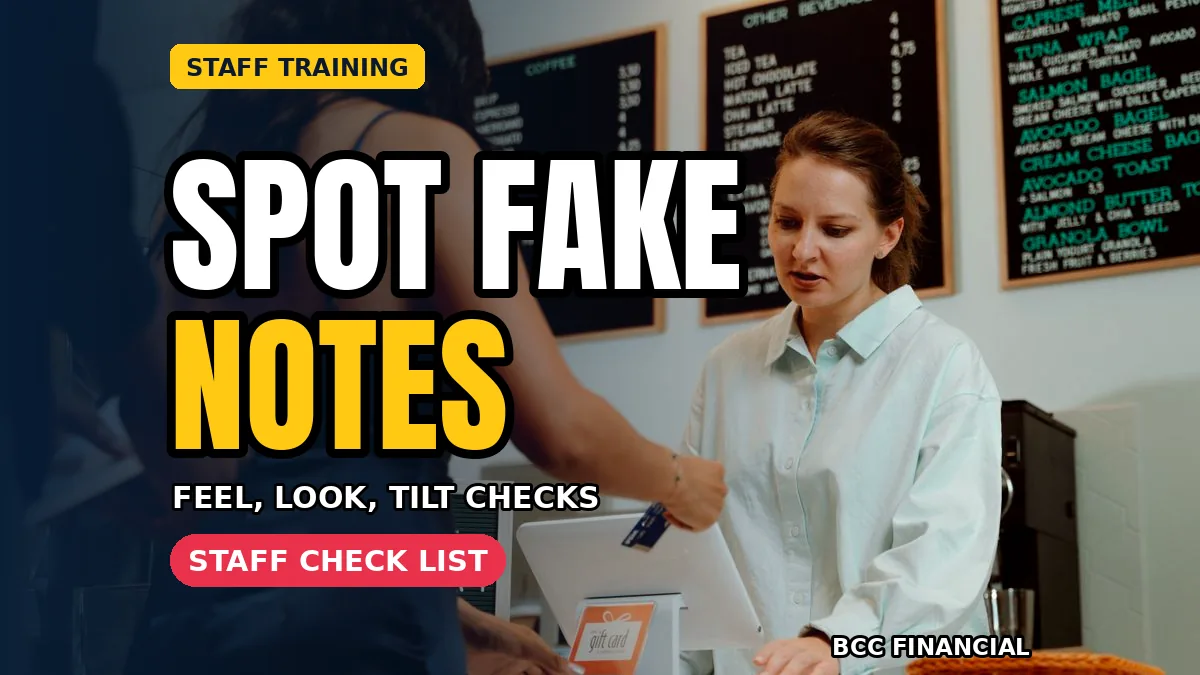
Teach the routine as three habits: feel, look and tilt. Used together, they form the core of how to spot counterfeit money business training should cover, and each habit takes only a few seconds once staff have handled genuine notes regularly.
- Feel: Genuine notes have a distinct texture. Run a thumb over the note and notice raised print in key areas; a note that feels unusually smooth, limp or waxy deserves a closer check.
- Look: Hold the note up to the light. Check for a watermark, a security thread and clear, sharp printing. Blurred images, dull colours or missing features are warning signs.
- Tilt: Turn the note slowly. Colour-shifting ink and moving security features should change as the angle changes. If nothing changes, pause and check again.
- Compare: When in doubt, compare the note side by side with a genuine note of the same denomination from the till. This comparison completes the basic how to spot counterfeit money business check.
The U.S. Currency Education Program provides official information on currency design and security features. Use it to keep your training accurate, and summarise its guidance in your own staff materials rather than copying text.
What to do and what not to do when a note looks wrong
Staff confidence matters as much as detection. A clear do and do not list turns how to spot counterfeit money business knowledge into safe behaviour, especially when a customer is waiting and the shop is busy.
- Do stay calm and polite, and follow the store policy you have been given.
- Do keep the note in view, call a manager, and note the time and a brief description of what happened.
- Do give the customer a receipt or clear explanation if policy says the note is retained, as local rules require.
- Do not accuse the customer; many people pass a bad note without knowing it.
- Do not hand the note back and accept it anyway, argue, or put yourself at risk to keep hold of it.
- Do not try to pass the note on elsewhere; record it and follow your reporting procedure.
These habits sit inside wider cash discipline. Our guide to cash handling security covers secure handling at the till, and our article on cash handling training for new staff shows how to build checks like these into induction from day one.
Record every incident the same way
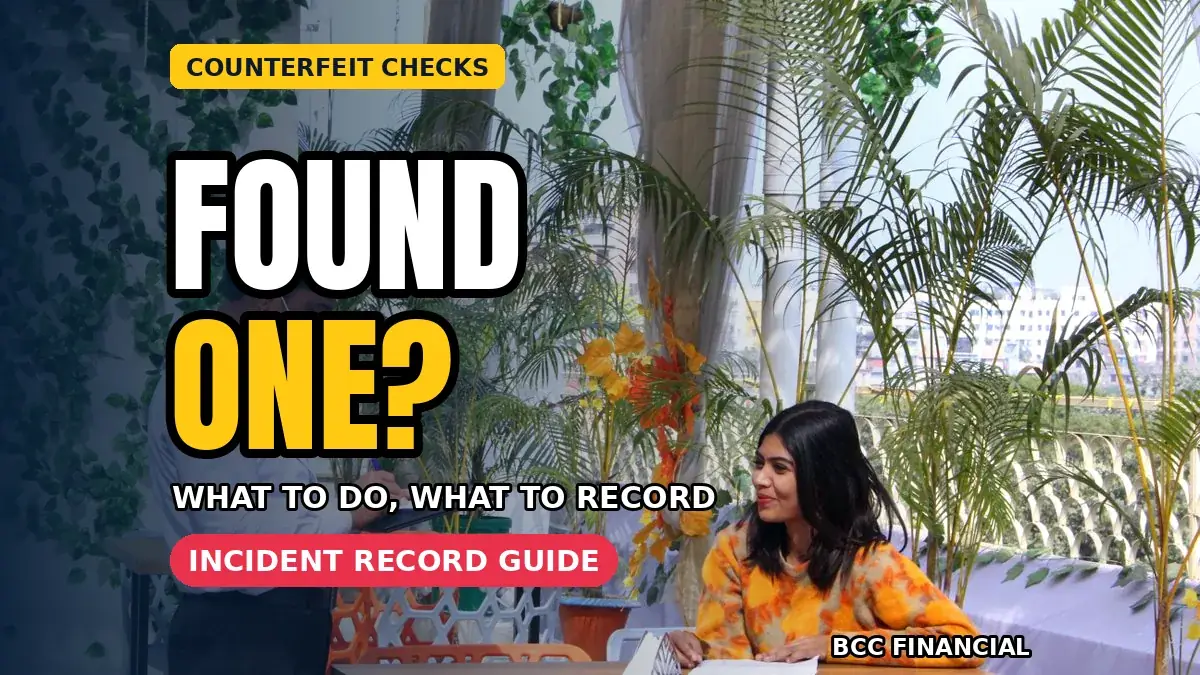
Keep a simple incident record for every suspected note, even if it turns out to be genuine. A consistent record is the part of how to spot counterfeit money business practice that owners most often skip, yet it is what reveals patterns by day, time or denomination.
- Date, time and till or location.
- Denomination and a brief description of the concern, such as feel, watermark or colour shift.
- Name of the staff member and manager informed.
- What happened next, following policy, and any reference number given when reported.
- A short note of any safety concern, without personal accusations.
Review the log monthly. If incidents cluster at busy times, add a second person at the till then, refresh training, and remind the team that pausing to check a note is always supported. Good records also help if you later discuss losses, insurance or staff training needs. Share what you learn at the next how to spot counterfeit money business refresher session for the whole team.
Watch the short video below for simple checks staff can use to spot counterfeit money at the till.
Frequently Asked Questions
Which notes should staff check most carefully?
Check larger denomination notes as a routine, and any note that feels unusual, whatever its value. A quick feel, look and tilt on higher value notes quickly becomes habit and adds only seconds to a transaction. Make that quick check part of your everyday how to spot counterfeit money business habit at every till.
What if a customer becomes upset when we check a note?
Stay friendly and explain that checks are standard for everyone. Call a manager early, keep your voice calm, and follow policy. Most customers accept a short, polite check when it is clearly routine.
Can a detection pen replace the feel, look and tilt routine?
A pen can be one extra tool, but it should not replace looking at security features and texture. Train staff in the full routine, and follow official currency guidance for the notes your business accepts. Include any pen use inside your how to spot counterfeit money business training, not instead of it.
What should we do with a note we believe is counterfeit?
Follow your store policy and local reporting rules, record the incident using the template above, and do not try to spend the note. If anyone feels unsafe, personal safety always comes before keeping the note.
Conclusion
A short feel, look and tilt routine, a calm do and do not list, and a simple incident log give every team a practical how to spot counterfeit money business system they can use with confidence on any shift. If you would like help building cash handling training and till procedures for your staff, contact BCC Financial for friendly, practical support.
Disclaimer: This article is general educational information only and is not personal financial, legal or security advice. Currency features and reporting rules change and vary by place, so check current official guidance and follow your local requirements.