
When a Supplier Fails Mid-Order: Protecting the Deposit You Paid and Re-Sourcing the Stock Without Paying Twice
Good supplier fails mid order deposit protection begins long before anything goes wrong — in the paperwork you keep when the order is placed. A supplier can stop trading, stop answering the phone, or simply stop delivering, and the moment you learn about it is the worst time to discover that your deposit was sent with no written terms, no delivery date and no record of what was agreed.
This guide is practical: protect the deposit paid, get the stock still needed without paying twice, and keep customers informed. It needs calm steps, in the right order, with everything written down. That is why supplier fails mid order deposit protection starts with paperwork, not with panic.
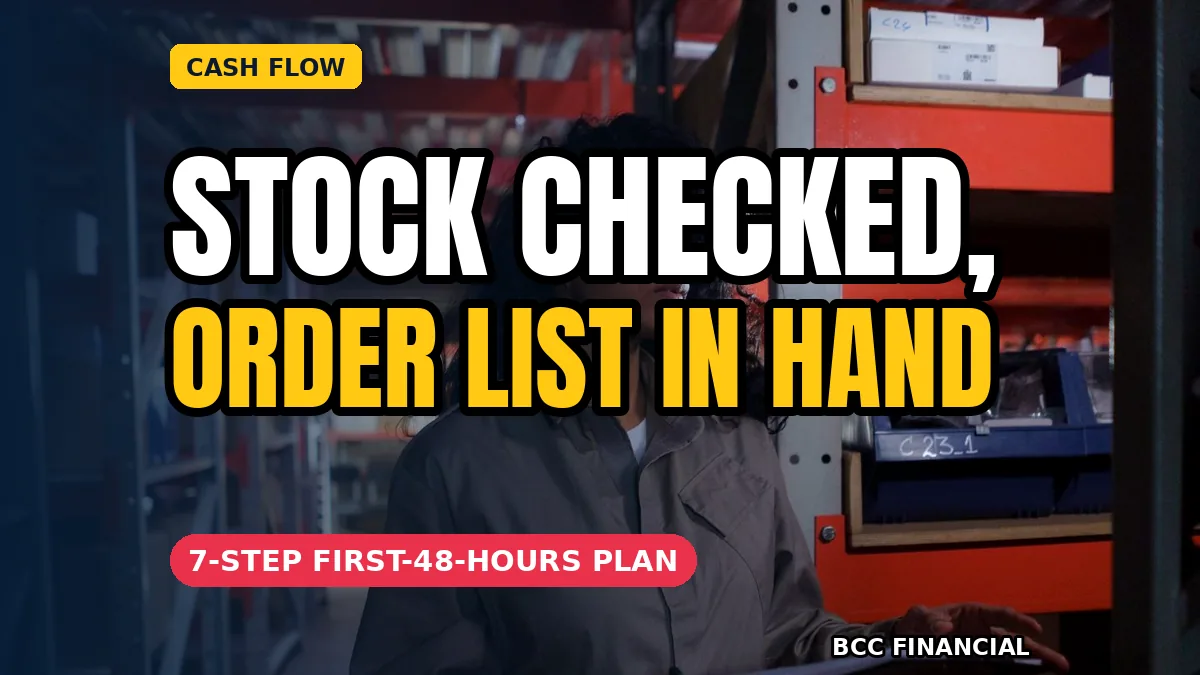
Supplier Fails Mid Order Deposit Protection: The First 48 Hours
When a supplier fails mid-order, the first two days set the tone. Work through these steps before re-ordering, because a rushed second payment is how businesses end up paying twice.
- Write down the facts: the order date, the deposit amount, when it was paid, and how.
- Gather the paperwork: the order, the invoice, any emails or messages agreeing the terms.
- Contact the supplier in writing, asking for delivery or a refund by a named date.
- Check whether any part of the order has already been delivered.
- Send the supplier no more money, whatever they promise.
- Speak to your bank about the payment, and ask what options exist.
- Tell affected customers honestly about the delay before they chase you.
Protecting the Deposit You Paid
Your deposit is only as safe as the record behind it. A written order, a dated invoice and a payment record showing the amount and date give you something to work with, whether you ask the supplier for a refund, speak to your bank, or talk to an adviser. If the supplier is in formal insolvency proceedings, follow the practitioner’s process and register your claim with the paperwork you hold. That record is the core of supplier fails mid order deposit protection.
How you paid matters. A card payment, a bank transfer and cash each leave a different trail, and your bank or card provider may have a process for payments where goods were not received — ask promptly, because such processes often have time limits. Whatever route you take, keep every message and letter, and note the date and name behind every phone call.
Re-Sourcing the Stock Without Paying Twice
Before you order elsewhere, work out exactly what you still need: which lines are missing, which have arrived, and which customers can wait for. Ordering the full list again, in a panic, is how the same stock gets paid for twice. A short written list, checked against what has actually been delivered, is worth an hour of anyone’s time — and it is the practical side of supplier fails mid order deposit protection.
Then look for a second supplier — ideally one used before. Ask about stock on hand, a realistic delivery date and payment terms, and get the answers in writing. Our guide to a second supplier for the stock you cannot run out of explains why keeping a backup supplier warm is a cost worth paying on purpose, before a failure forces the issue.
What to Tell Customers While You Wait
Customers are far more patient with a delay they hear about early than with one they discover. Tell them plainly that the supplier has failed to deliver, give a realistic new date if you have one, and offer the choices you can honour — wait, swap to an alternative, or a refund where your terms allow it. Keep a note of who was told what and when.
If a customer has paid you a deposit for the same stock, that money needs the same care as your own deposit did: hold it apart from everyday spending until the order is fulfilled or refunded. The problem becomes far worse when a business has already spent the customer’s deposit on other things.
Stopping It Happening Again: Checks Before the Next Deposit
Once the immediate problem is handled, change the way you order. Before paying a deposit, check the supplier’s recent trading history, agree the delivery date and the refund terms in writing, and keep deposits as small as the supplier will accept. For the stock you cannot run out of, keep a second supplier warm with occasional small orders, so they are a real option, not a name in a drawer. Treat these checks as your standing supplier fails mid order deposit protection routine.
Also look at how much cash is tied up in stock generally: our guide to inventory and cash flow explains how unsold stock quietly ties up money that could cushion a shock like this. The US Small Business Administration’s guidance on managing business finances is a useful starting point for building a cash buffer that makes a supplier failure survivable.
FAQ
Can I get my deposit back if the supplier has stopped trading?
It depends on how you paid and whether the supplier is in a formal process with an insolvency practitioner. Speak to your bank or card provider promptly, and register any claim with the paperwork you hold. A supplier fails mid order deposit protection claim is always stronger with a written order and a dated payment record.
Should I keep ordering from the same supplier if they start delivering again?
Only with caution: smaller orders, shorter payment terms and written delivery dates. A supplier that failed once may fail again, so keep the second supplier warm — a standing part of supplier fails mid order deposit protection.
What if only part of the order was delivered?
Record exactly what arrived and what did not, with dates, and tell the supplier in writing. Only re-order the missing lines, and keep the delivered stock in your records as received, not as still owed.
How large a deposit should I pay a new supplier?
As small as the supplier will accept, and only after the terms — including what happens if they cannot deliver — are in writing. A large deposit to a new supplier is the riskiest payment a small business makes.
Conclusion: Paper First, Then a Calm Second Order
Sound supplier fails mid order deposit protection is three habits: keep the order and payment record, act in writing when a supplier fails, and re-source only what is genuinely missing. Then a failed supplier is a difficult week, not a threat to the business.
If cash routines are one of several money habits you are tightening this year, BCC Financial’s Cash Flow guides apply the same discipline to the other ways money leaves a business before stock arrives. Start with the supplier your business depends on most.
This article is general educational information only and is not financial advice. Every business’s circumstances differ, so consider seeking professional advice for decisions about your own business.