Trading on Christmas Eve: The Last-Minute Rush, the Early Close and the Cash Count Before the Holiday
Christmas Eve is the shortest trading day of the year and also one of the busiest, because every customer who walks through the door has left something until the last possible hour. The shelves empty quickly, the queue stretches past the door, and the clock runs toward an early close. A steady trading Christmas Eve last minute rush early close cash count before holiday routine is what keeps that rush orderly, because the cash has to be counted and locked away before the holiday begins, not after it.
How the Trading Christmas Eve Last Minute Rush Early Close Cash Count Before Holiday Day Unfolds
The rush arrives in waves, not all at once, and the first wave comes early. Shoppers who meant to finish days ago arrive at opening, so have the till counted, the float agreed and the shelves faced before the door opens, because a trading Christmas Eve last minute rush early close cash count before holiday plan that starts late spends the whole day catching up. Put your calmest member of staff on the till, keep the fastest seller near the door, and agree beforehand who handles a customer who wants an item you no longer stock.
Keep the queue moving by keeping the till simple. Take the payment, give the change, offer the receipt, and move on, because a long conversation at the till holds up twenty people behind the customer. If a customer asks for gift wrapping, a price check, or a special order, take their details and promise a call after the holiday rather than holding the queue while you search the stockroom. A trading Christmas Eve last minute rush early close cash count before holiday till that stays simple through the rush is the one that still balances at closing.
What the early close changes
An early close compresses everything, and the last hour matters more than the first three. Stop taking new work that cannot be finished before closing, such as a repair or a large order, and tell customers plainly what time the doors shut so nobody is surprised. A trading Christmas Eve last minute rush early close cash count before holiday routine that guards the last hour protects the count that follows, because a shop that closes on time counts its cash calmly, while a shop that closes late counts it in a rush.
Counting the Cash Before the Holiday
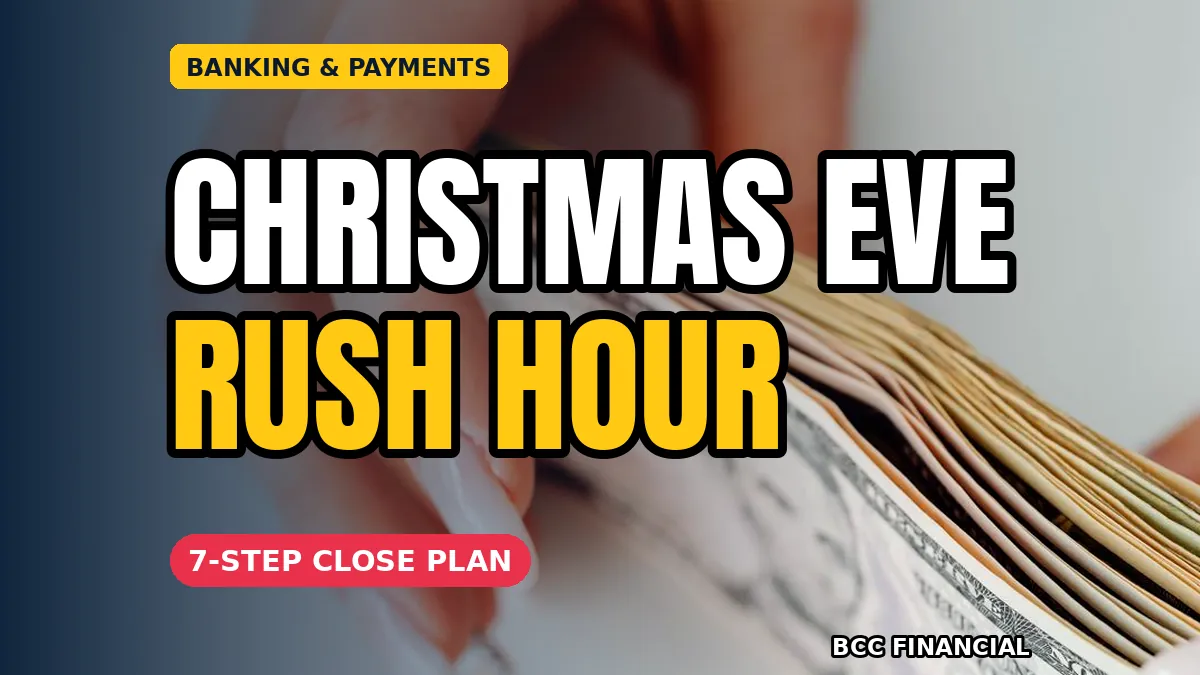
Count the till the moment the doors shut, while the day is still fresh in everyone’s mind. Lift the drawer, count the notes first, then the coins, check the card slips against the till total, and write every figure on the till sheet before anyone leaves. A trading Christmas Eve last minute rush early close cash count before holiday count done at once is worth far more than one done the next morning, because by then nobody remembers which refund belonged to which sale.
Two people should be present for the count, even if one of them only watches and signs the sheet, because a trading Christmas Eve last minute rush early close cash count before holiday count shared by two people protects the money and the staff alike. If the count is out, count again slowly and look first at the refunds, since a refund written down wrongly in the rush is the most common cause of a closing difference on Christmas Eve.
What to Do With the Takings When the Bank Is Shut
The banks close for the holiday too, so the takings from Christmas Eve may sit in the shop for several days, and that is where the safe earns its keep. Put the cash in the safe the same evening, with the till sheet and the card slips on top, and lock it before anyone goes home. That is the trading Christmas Eve last minute rush early close cash count before holiday ending every shop should aim for: doors shut, cash counted, safe locked.
Write down who holds the safe keys over the holiday, and where the spare key lives, so the first day back does not begin with a search. Tell only the people who need to know, and keep the note somewhere safe rather than taped to the safe itself. If the takings are large, consider whether your usual cover expects them to be banked within a certain time, and speak to a qualified adviser if you are unsure.
Frequently Asked Questions
Should we stay open later on Christmas Eve if the queue is long?
Stay open only if you can still close, count and lock away safely afterwards. Tell the queue plainly when the doors will shut and serve the customers already inside. A trading Christmas Eve last minute rush early close cash count before holiday plan that respects its own closing time protects the cash count, the staff, and the holiday that follows.
How do we handle a customer who arrives minutes before closing?
Serve them with the same care as the first customer of the day, but keep the sale simple and do not start work that cannot be finished before the doors shut. Take the payment, give the receipt, and thank them, then close on time, because a trading Christmas Eve last minute rush early close cash count before holiday close kept on time protects the count that follows.
What if the till is short after the Christmas Eve count?
Count it again from the start, check the refunds first, then the largest notes, then the card slips, and write the difference in the incident book with the date and the amount. A small difference after a rushed day is usually a counting slip rather than anything worse.
Rush Over, Count Done
Christmas Eve asks a shop to do a full day of trading in a short one, and the way to survive it is to count first, serve fast, close on time, and lock the takings away before the holiday begins. Agree the float before opening, keep the till simple through the rush, guard the last hour, count with two people the moment the doors shut, and put the money in the safe with the sheet on top. That is the whole of a sound trading Christmas Eve last minute rush early close cash count before holiday routine.
If the counts, the sheets and the holiday holds take up more of your week than the shop floor itself, BCC Financial can lift the routine off your desk, the records and the reconciliations, so you can get back to serving customers.
More from BCC Financial: Christmas stock payment stages and choosing a business safe — plus guidance from the Internal Revenue Service for small businesses and the self-employed.
Disclaimer: Please treat this article as general information for small shops about trading on Christmas Eve and counting cash before a holiday. It is not financial, tax or legal advice, and opening hours, cash handling and record-keeping duties differ by place and by business. Look up the rules that apply where you trade, or ask a qualified adviser, before you change how your shop handles money.