The Customer Who Wants to Pay by Bank Transfer at the Till: The Wait, the Proof and the Goods
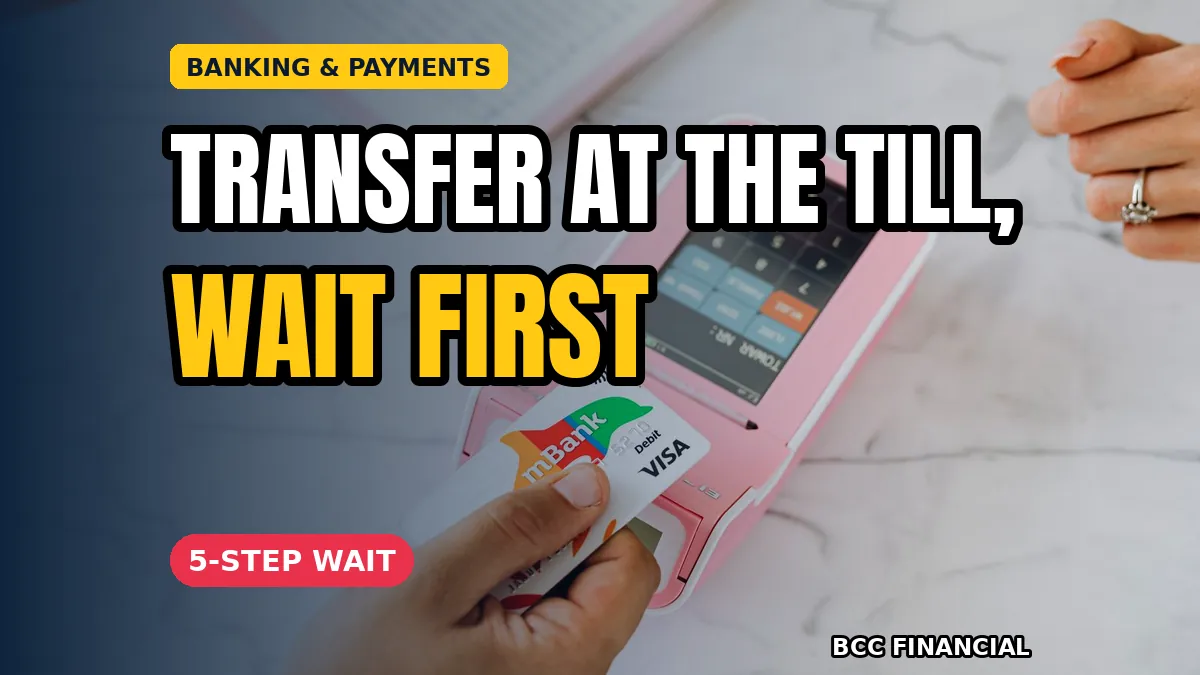
The customer has chosen the goods, the total is agreed, and then they say they would rather pay by bank transfer than by card or cash. The till cannot take a transfer the way it takes a card, the money does not arrive at once, and the goods are still sitting on the counter while everyone waits. That is the heart of a customer pay bank transfer at till wait proof goods sale: the payment is real, the wait is real, and the goods should only leave once the money has actually arrived. This guide sets out a calm routine for the till, so the customer is treated well and the shop is never left unpaid.
How a customer pay bank transfer at till wait proof goods Sale Works in Practice
Agree the total first and write it down where both sides can see it, on the receipt or on a slip at the till. Show the customer the bank details they need: the account name, the account number, the sort code, and the reference you want them to use, which should be the receipt or invoice number. A customer pay bank transfer at till wait proof goods sale starts well when the customer sends the exact total with the right reference, because that is the payment your bank statement will show later.
Transfers are not instant in the way a card payment is. Many arrive within minutes, but some take longer, and a few are held for extra checks before they reach your account. Never hand over the goods on the strength of a sent screen alone, because a screen can show a transfer that has been started, cancelled, or sent to the wrong account. The money has to be visible in your own account before the sale is finished.
The five steps before the goods leave
Run these five steps in the same order every time. First, agree the total and write it on the receipt. Second, show the customer your bank details and the reference to use. Third, let the customer send the transfer and show you the confirmation screen. Fourth, check your own banking app or statement for the money, and match the amount and the reference. Fifth, only then bag the goods, mark the receipt as paid by transfer, and give the customer their copy. A customer pay bank transfer at till wait proof goods routine that follows this order never gives the goods away on a promise.
The Wait at the Till: Keeping It Short and Polite
A queue can build while one transfer is checked, so keep the waiting customer comfortable and the line moving. Set the goods aside in a bag with the receipt attached, serve the next customer, and check the transfer again in a few minutes. A customer pay bank transfer at till wait proof goods wait feels much shorter when the customer can see their goods are set aside and safe, and when nobody is standing over them while the phone loads.
Offer a simple choice if the transfer is slow: the customer can leave a deposit and collect the goods later, or they can pay another way now and keep the transfer for another day. Never press a customer to send the money twice, and never accept a screenshot as the only proof. A screenshot can be edited, cropped, or taken from an old payment, and it proves nothing about the money reaching your account.
When the Transfer Does Not Arrive
If the money has not arrived after a fair wait, ask the customer to check the details they typed: one wrong digit in an account number sends the money somewhere else, and a missing reference makes the payment hard to find. A customer pay bank transfer at till wait proof goods check that finds a wrong digit has done its job, and the customer can send the money again. Ask them to read the confirmation screen out loud, and compare the account number and the amount with your own details. Most failed transfers are a typing slip, and most typing slips are found in a minute.
Keep the goods, keep the receipt, and write a short note with the time, the amount, the reference that was used, and the name on the sending account. If the customer has to leave, take their name and a phone number, and agree when you will check again. A customer pay bank transfer at till wait proof goods note written at the time is worth far more than a memory of the conversation a week later.
Frequently Asked Questions
Can I let the customer take the goods while the transfer is still pending?
No, keep the goods until the money shows in your own account. A customer pay bank transfer at till wait proof goods sale is only finished when the transfer has arrived, and a pending payment can still fail, be cancelled, or go to the wrong account. Offer to set the goods aside instead.
What proof should I accept at the till?
Accept only your own bank record: the money showing in your banking app or on your statement, with the right amount and reference. A customer pay bank transfer at till wait proof goods check that relies on the customer’s phone screen alone is not a check at all, because a screen can be faked or can show a different payment.
What if the customer says the money has left their account?
Believe them, but still wait for it to reach yours. Ask for the reference they used and the exact time they sent it, write both down, and check your account again later in the day. A customer pay bank transfer at till wait proof goods delay is usually a slow transfer, not a missing one, and a written note keeps the follow-up simple.
Wait for the Money, Then Hand Over the Goods
Bank transfer at the till is a fair way to pay, and it works when the till has a routine for it. Agree the total, show the details, let the customer send the money, check your own account, and only then hand over the goods with a receipt marked paid by transfer. That is the whole of a sound customer pay bank transfer at till wait proof goods routine. If payment queries keep eating into your selling time, BCC Financial can take the routine off your hands — the records, the follow-ups and the awkward conversations — so you can get back to the work that pays.
Two more guides from BCC Financial: splitting a payment between cash and card at the till and taking a deposit by bank transfer, plus the Small Business Administration on managing your business.
A quick word of caution: this piece is general information for shop owners about taking bank transfers at the till, and it is not advice for your own payment terms or banking arrangements. Transfer times and bank checks can vary, so read your bank’s guidance and agree your till rules in writing before you offer this way to pay.