Cash Handling at a Car Boot Sale: One Morning, One Float and the Count Before You Drive Home
A car boot sale starts before sunrise, with tables unfolding in a field and buyers already circling the car. Cash changes hands fast all morning, in small notes and handfuls of coins, and by the time the last table is folded it is easy to lose track of what was sold and taken. A cash handling car boot sale routine keeps one float, one money belt or box, and one count before you drive home, so the morning’s takings are a figure you can trust instead of a guess made in the car park. This guide covers the morning in order.
How a cash handling car boot sale Morning Should Be Set Up
Pack the money kit the night before, in the same bag every time: a counted float in small notes and coins, a money belt or a cash box that locks, a notebook and pen, a roll of small bags, and a few price stickers. A cash handling car boot sale starts well when the float is counted at home and written down, so the morning opens on a known figure rather than a handful of change fished out of a pocket. Keep the float separate from your own purse or wallet, and never mix the two during the day.
Set the stall so the money stays on your side of the table, with the cash box or belt where only you can reach it, and tuck larger notes away as the morning goes on. Early buyers are the keenest bargain hunters, and they arrive while you are still unpacking, so have the float ready before the first car pulls in. A tidy table and a ready seller take more money than a stall still being set up at nine.
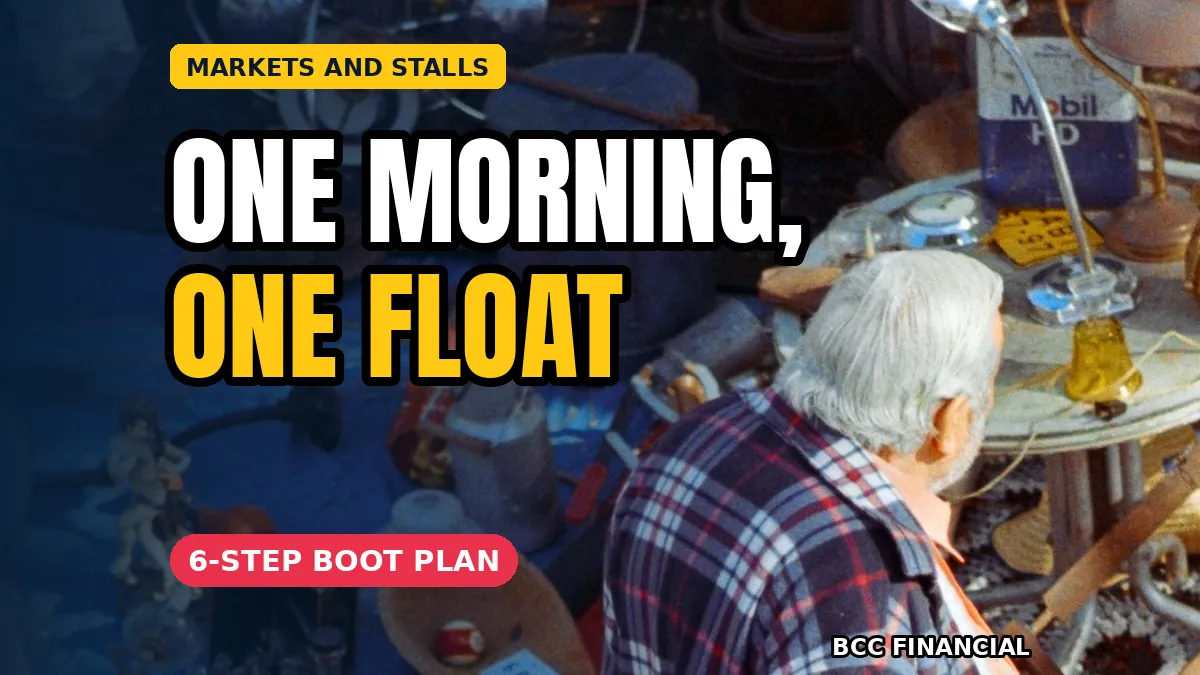
The six steps for one morning, one float, one count
Run these six steps and the money looks after itself. First, count the float at home and write it in the notebook. Second, keep every sale’s cash in the same belt or box, and put the change back from the same place. Third, move large notes into a separate zipped pocket during the morning, so the working float stays small. Fourth, write the price of each bigger sale in the notebook as you make it. Fifth, stop selling ten minutes before you plan to leave, and count the box away from the crowd. Sixth, take out the float, write down the day’s takings, and check the notebook total against the cash in your hand before you drive home.

Giving Change in a cash handling car boot sale Rush
Price most things in whole pounds, because whole-pound prices make change simple and keep the queue moving. A cash handling car boot sale float works best when it is heavy on pound coins and five-pound notes, since most sales are small and buyers often pay with a ten or a twenty. If a buyer offers a fifty-pound note for a two-pound item early on, it is fair to say you cannot change it yet, and to ask for smaller notes or a card payment if you take them.
Count change back out loud, and lay the buyer’s note on the table until the change is in their hand. That small habit stops most arguments about what was paid. If two people work the stall, only one should hold the money, because two hands in the same cash box is how notes go missing without anyone knowing. The second person can wrap, bag and talk to buyers while the money stays with one pair of hands.
The Count Before You Drive Home
Count before anything is packed away, while the morning is fresh. Count the notes first, then the coins, and write each total in the notebook beside the morning’s float figure. A cash handling car boot sale count done in the car park, away from buyers, takes five minutes and turns the whole morning into a single trustworthy figure. If the cash and the notebook disagree, check the bigger sales first, then recount the coins, and write down the difference with a short note about what you think happened.
Keep the takings separate from the float on the drive home, in different pockets, so the float is ready for the next sale and the takings are ready to bank. Unsold items go back in the same boxes they came in, and anything promised to a buyer gets written in the notebook before you leave. A morning that ends with a counted total, a written record and a tidy car is a morning you can repeat next weekend without starting from scratch.
Frequently Asked Questions
What should a cash handling car boot sale float look like?
Build it from small money: plenty of pound coins, some five-pound notes, and a few ten-pound notes for change. Count it at home, write the total in your notebook, and keep it apart from your own purse. A cash handling car boot sale float that is counted before you leave is the only figure the rest of the day can be checked against.
How do I keep the cash safe at a busy car boot sale?
Use a money belt or a locking cash box that stays on your side of the table, and move large notes into a separate zipped pocket during the morning. Only one person should handle the money. A cash handling car boot sale stays safe when the cash is always in one place and always in one person’s care.
What if my count at the end does not match my notebook?
Check the bigger sales first, then recount the coins, and look for a sale that was never written down. Write the difference in the notebook with a short note about the likely cause, and carry the figure into the next sale’s opening check. A cash handling car boot sale count that is written down honestly is more useful than a tidy total built on a guess.
One Morning, One Float, One Figure You Trust
A car boot sale is a morning of small, fast sales, and the money only stays honest when it has one home and one count. Pack a counted float, keep every sale in the same belt or box, move the big notes aside as you go, and count everything before you drive home. That is the whole of a sound cash handling car boot sale routine. If the records from your market days keep piling up, BCC Financial can take the routine off your hands — the counts, the sheets and the tidy pack for your books — so you can get back to the work that pays.
Also on BCC Financial: cash handling on a building site and cash handling at pop-up shops, plus the Small Business Administration on managing your business.
One thing to keep in mind: this article is general information for people selling at a car boot sale, and it is not advice about permits, pitch rules or tax on what you sell. Rules can differ by venue and by area, so check the organiser’s terms and the local rules that apply to you before the day.